
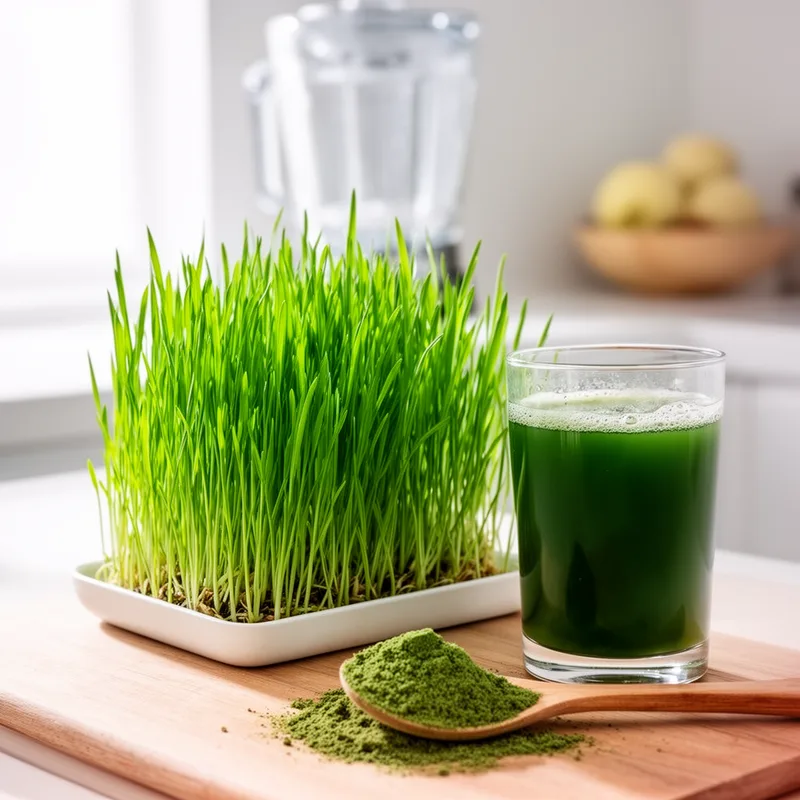
barley grass
- noun
- /ˈbɑrli ɡræs/
- She began taking a teaspoon of barley grass daily to boost her iron and vitamin intake.
Examples
-
Many health stores sell organic barley grass powder for adding to smoothies each morning.
-
The recipe called for fresh barley grass juice stirred into the salad dressing before serving.
-
I drink barley grass juice every morning.
-
She prefers barley grasses over wheat for her smoothies.
-
Many health stores sell organic barley grass powder that can be added to smoothies for a nutrient boost.
-
She started taking a daily teaspoon of barley grass to enhance her overall health and increase her vitamin intake.
-
The fresh barley grass juice was the key ingredient that added flavor to the salad dressing.
Synonyms

 9
5.3
9
5.3

Young green shoots of the wheat plant used in juice or powder
Surface Forms
Morphology
The meaning ('young green leaves or processed forms of the barley plant') is a straightforward composition of 'barley' (the cereal plant) and 'grass' (the green, narrow-leaved parts), so the phrase signals the grassy part of the barley plant or its products. This noun–noun compound follows regular English compounding patterns and is conceptually transparent and likely understandable to a B1 learner who knows both constituent words.
Etymology
The name barley grass comes from the young green leaves of the barley plant that people used to eat or drink. Because those leaves were dried or juiced as a 'health supplement', the term now means the fresh 'young leaves' or the powder, juice, and tablets made from them.