
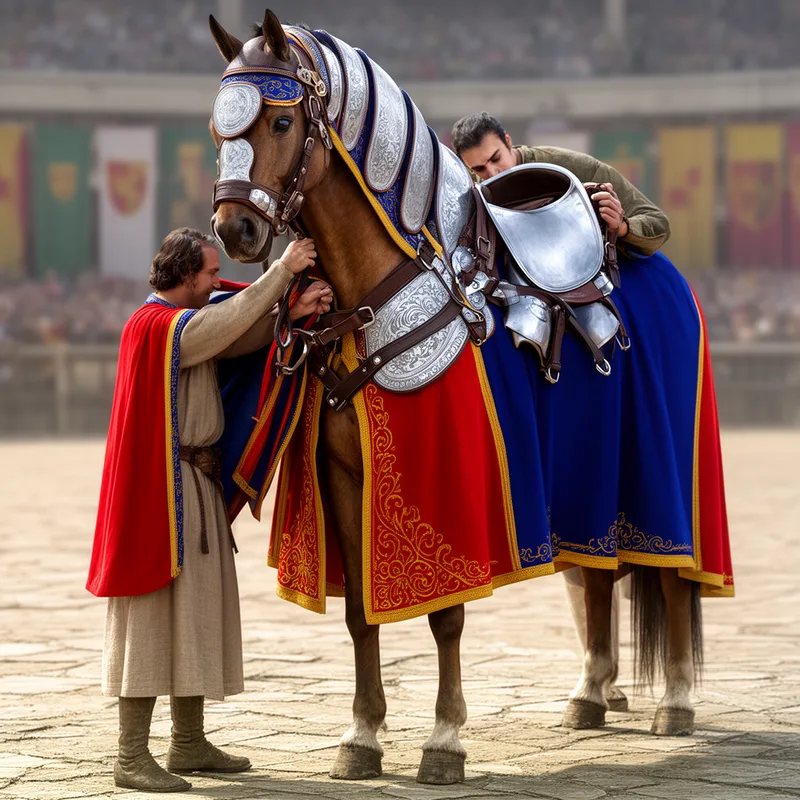
to barde
- verb
- Archaic
- During the parade, the handlers barded the royal steeds with richly decorated cloths.
Examples
-
The knights would barde their horses before entering the tournament.
-
The knights barded their steeds with colorful fabrics.
-
In preparation for battle, the soldiers began barding their mounts with heavy armor.
-
They barde the horse for the parade.
-
Before the festival began, they barded their horses with vibrant decorations to impress the crowd.
-
The royal guards barded the horses with ornate coverings for the grand procession through the city.
-
At the fair, the participants barded their steeds in elaborate costumes to showcase their heritage.
Synonyms

 3
4.2
3
4.2

Put decorations on animals for special events


 1
9.9
1
9.9
To cover a horse with decorative cloth or armor for ceremonies

To dress a horse in decorated cloth for parades or ceremonies
Surface Forms
Etymology
Barde comes from old French barder, which meant to cover a horse with cloth or armor; think of it as putting a special 'coat' or 'armor' on a horse for a parade or battle, which is why barde means to dress a horse with protective or decorative coverings.