
barcoding
- noun
- /ˈbɑːrˌkoʊdɪŋ/
- Some of these suppliers are starting to employ EDI and barcoding for the products shipped to ILI.
Examples
-
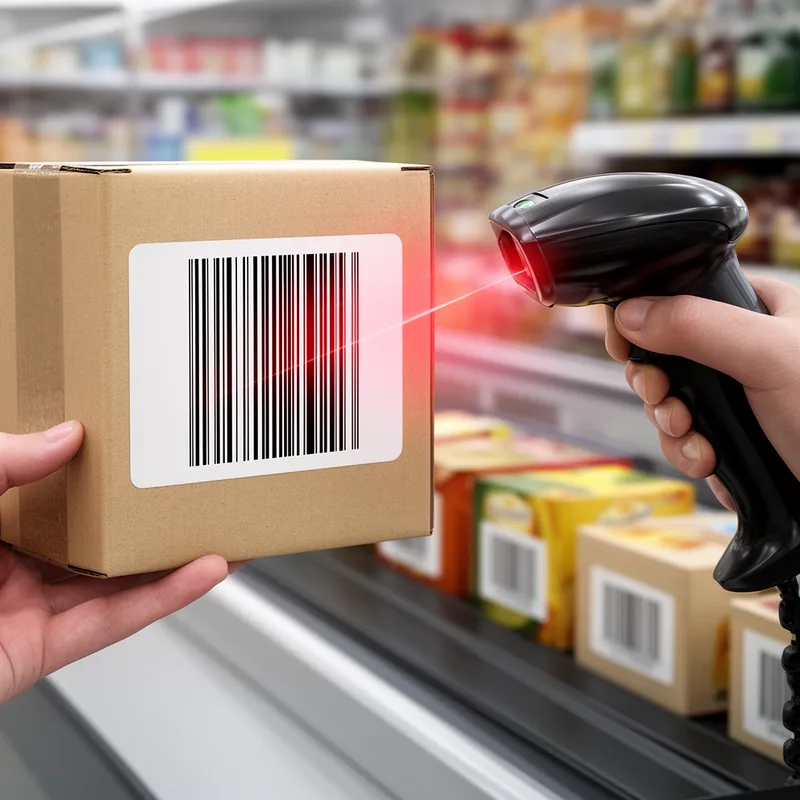
Retail stores increasingly rely on barcoding to speed up checkout processes and manage stock.
-
James Haskell's cookbook, right, has barcodes on the recipe pages that scan immediately in the MyFitnessPal.
-
When a batch of raw materials is received, the batch should be scanned into the system via barcoding.
Academic text (2002) -
To verify that the barcode is complete, take any barcode and sum the digits at odd numbered positions.
-
Using electronic methods, such as barcoding of freight cars and shipment containers, rail carriers can capture location information and route it over communication lines to the buyer.
Academic text (1990) -
The warehouse implemented an efficient barcoding system to accurately track inventory levels.
-
Manufacturers utilize barcoding to label products, ensuring easy identification and tracking during shipping.
Surface Forms
Morphology
Etymology
Barcoding comes from barcode (patterns of bars that hold a 'code') plus -ing. That's why barcoding means putting a code on items so a scanner or machine can read them and the items can be found or tracked.

