
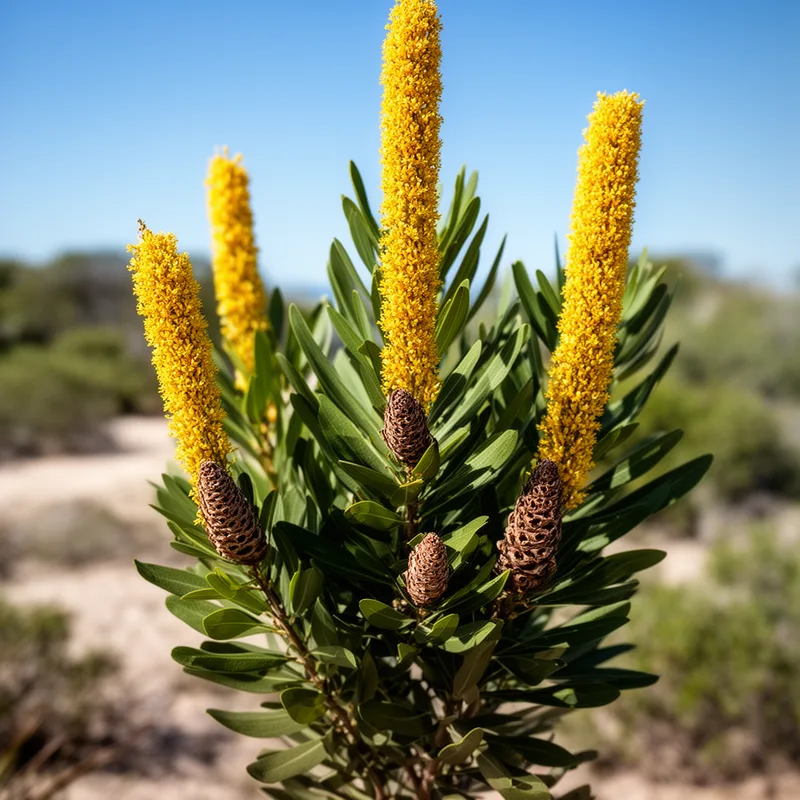
banksia
- noun
- /ˈbæŋk.si.ə/
- Australian
- In Australia, the banksia plant thrives in coastal regions and is recognized for its unique conelike fruit.
Examples
-
Flowers may grow singly, as tulips do, or with companions on a common stem, called an inflorescence, as the banksia does (see rightmost photograph on opposite page).
Academic text (2006) -
They are (left to right): tulip, Queen Anne's lace, poppy, tulip, thistle, chrysanthemum, and banksia.
Academic text (2006) -
What may appear to be a single flower in Queen Anne's lace, chrysanthemum, or banksia is actually made up of many individual flowers.
Academic text (2006) -
The banksia tree is known for its beautiful yellow flower spikes that attract native birds.
-
Gardeners appreciate the banksia for its leathery leaves and vibrant flowers that bloom in late spring.
Synonyms

An Australian evergreen shrub or tree with thick leaves and cone-shaped yellow flower spikes
Compounds
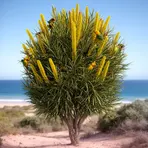
- Australian
A bushy Australian tree near the coast with long leaves and yellow flower spikes that attract birds
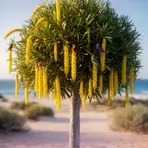
- Specialized
A tree from eastern Australia with green leaves and long yellow flowers that make nectar and attract birds
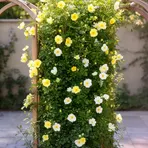
A nearly thornless climbing rose with evergreen leaves and pale yellow or white single flowers

- Specialized
An evergreen climbing rose from China with yellow or white single flowers often grown in gardens
Surface Forms
Etymology
The word banksia is named after the British plant collector Sir Joseph Banks, who worked in Australia. It literally means 'Banks's plant', which is why the Australian shrub and tree are called banksia.

