
bandgap


 1
7.9
- noun
- /ˈbændˌɡæp/
- Specialized
- An initial optical excitation of electrons across the bandgap produces a small, nonequilibrium excess electron-hole pair population.
- photonic bandgap
- bandgap of 1.1 eV
- semiconductor bandgap
Examples
-
Elemental sulfur is an even-valence, wide-bandgap insulator under normal pressures, but becomes metallic at about 90 GPa.
Academic text (1998) -
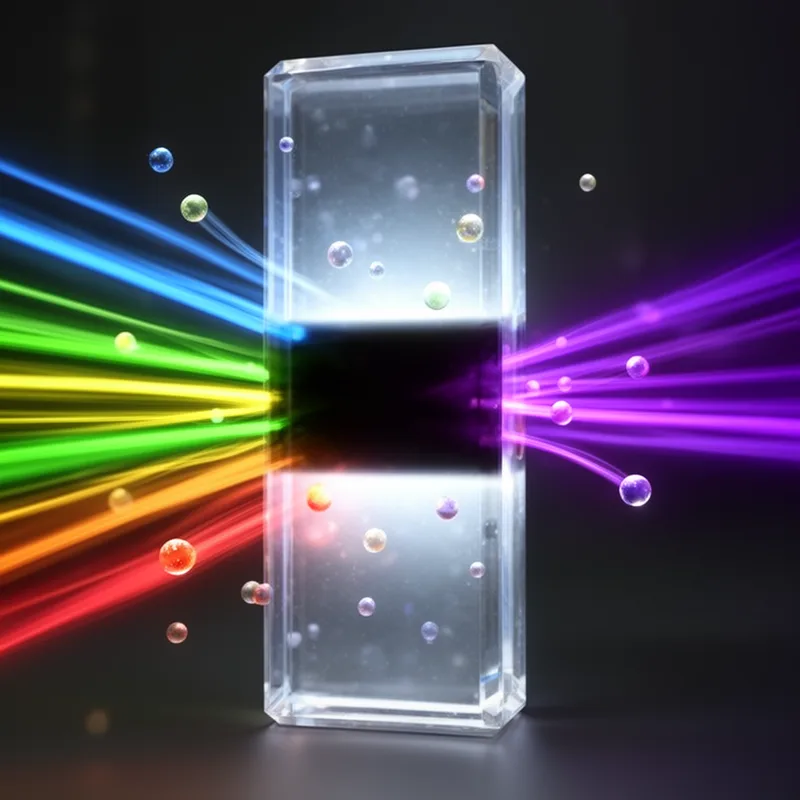
When light excites an electron across the bandgap, the electron leaves behind a hole.
Academic text (2002) -
The larger the bandgap, the more energy is required from the impinging light.
Academic text (1993) -
Researchers are moving closer to the goal of using photonic bandgap structures to make new, flexible optical devices.
Academic text (1999) -
Nevertheless, Russell's group has shown that it's possible to get a two-dimensional bandgap using these structures.
Academic text (1999) -
Photons whose energies lie within the bandgap cannot propagate through the structure.
Academic text (1999) -
SiO2, with a bandgap exceeding 6 eV, is transparent throughout the visible spectrum.
Academic text (1992) -
Materials with bandgaps nearer to 1.5 eV, such as GaAs and CdTe, have higher theoretical efficiencies.
Academic text (1993) -
Photons whose energies lie within the bandgap cannot propagate through the structure.
-
The larger the bandgap, the more energy is required from the impinging light.
Synonyms

A range of sound or electrical signals that a filter makes much weaker
Surface Forms
Morphology
Etymology
Bandgap is made of band (a 'range' or group) and gap ('a space' or break). It gives a clear picture: a 'band' of energies with a 'gap' where waves or electrons cannot pass, so the bandgap tells us which energies a material will block or let through.