

ban
 1
9.9
1
9.9

- noun
- /bæn/
- Specialized
- In information theory, a ban measures the level of uncertainty in a system.
Examples
-
The researchers used a ban to quantify the information gained from their experiments.
-
Each event in the study was assigned a ban to indicate its significance based on probability.
-
The weapons design laboratories can calculate what value of alpha would be allowed under the test ban.
Academic text (1995) -
Such a proviso was said to be necessary to gain support for a total test ban from the Joint Chiefs of Staff and Defense Secretary William Perry.
Academic text (1995) -
In October, in recognition of its test-ban potential, IRIS received a special Congressional appropriation of $21 million.
Academic text (1993) -
In the estimation of individuals who have devoted much of their adult lives to this issue, the time may be ripe at last for a comprehensive test ban to be concluded.
Academic text (1993) -
One example of a ban was the limited chlorofluorocarbon (CFC) ban imposed by the Food and Drug Administration in 1978.
Academic text (1993) -
The tuna-dolphin ruling evaluated the appropriateness of using trade measures, such as import bans, to encourage environmentally sound behavior when it also impedes and restricts trade.
Academic text (1995)
Synonyms
 8
9.9
8
9.9
A unit for measuring information equal to choosing one of ten equally likely options
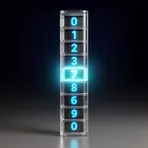
A unit of information equal to one digit in base ten

A unit that measures information using base ten
Compounds

- Formal
5
3.7
An agreement where countries promise not to explode nuclear bombs to see if they work
Surface Forms
Etymology
Ban (unit of information) is a unit that measures information using base ten, so one simple decimal digit is one ban. That's why scientists use the ban to talk about how much information a decimal choice gives you.