

balm of Gilead
- noun
- /bɑlm əv ˈɡɪliəd/
- Literature
- The ancient Egyptians prized balm of Gilead for its healing properties.
Examples
-
Traders once carried balm of Gilead across great distances to sell in foreign markets.
-
The ancient Egyptians used balm of Gilead for healing wounds.
-
Legends speak of the balm of Gilead as a cure for all wounds.
-
Do you know where to find balm of Gilead?
-
Legends speak of the balm of Gilead as a cure for all wounds.
-
The ancient Egyptians prized balm of Gilead for its fragrant resin used in medicine.
-
Traders once carried balm of Gilead to sell in foreign markets due to its healing properties.
Synonyms

 2
7.7
2
7.7

A sticky fragrant gum from some trees used for medicine and perfumes


 1
9.9
1
9.9
A rare fragrant oil from plants used long ago for smell and healing
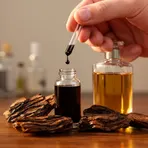 1
9.9
1
9.9
A dark, very fragrant oil or wood used to make rich perfumes
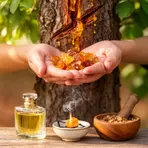
A natural substance with a pleasant smell that trees and plants make and people use in perfume, incense, and medicine
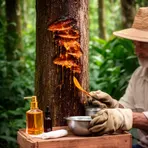
A South and Central American tree that makes a sticky resin used in perfume and medicine
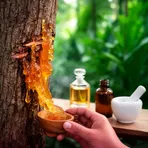
A fragrant sticky substance from trees that grow in Sumatra used in perfumes and medicine

A sticky yellowish-brown resin from a South American tree used in cough syrups and perfumes
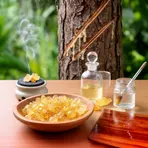
A fragrant resin from trees used in incense, varnish, and perfume
Surface Forms
Morphology
balm + of + Gilead
Because 'balm' denotes a soothing medicinal substance, a learner who knows 'balm' and recognizes 'Gilead' as a place can plausibly infer a literal soothing ointment and analogically arrive at 'something that brings comfort'. However, the extended, conventionalized figurative meaning depends on biblical/cultural knowledge of 'Gilead' and idiomatic usage, so the full sense is not fully predictable for a B1 learner without exposure.
Etymology
Balm of Gilead is named for an ancient fragrant resin from the land of Gilead that people used as medicine and perfume. Because they believed the resin could heal wounds, the phrase came to refer to a 'healing' ointment.