
baldachin
- noun
- /ˈbɔːldəˌkɪn/
- Specialized
- Around them are arrayed numerous small saint figures, all framed by their own socle and baldachin, while more carved figures appear under Gothic canopies set into the elaborate architectural superstructure that crowns the whole.
Examples
-
In the medallion, Christ holds a single host before his body, a theme echoed in the church's stone sacrament house, on which an intercessionary Man of Sorrows stands under a baldachin.
Academic text (2005) -
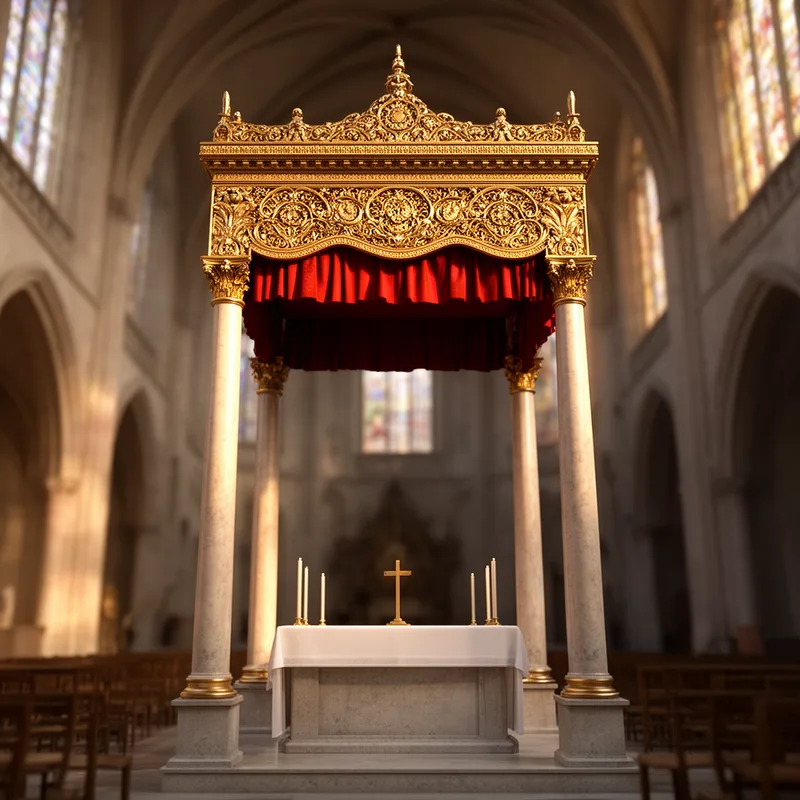
The altar was beautifully adorned with a baldachin supported by intricately carved columns.
-
A pulpit made of beautiful wood, raised high in the old style, resting under a round baldachin suspended from the ceiling.
Blog text (32) -
In England, the wall surface dissolves into lacy configurations of niches and baldachins containing sculptured figures.
Academic text (2000) -
In this image, the bishop, accompanied by the clergy and followed by the populace, carries a monstrance under the shelter of a portable baldachin decorated with the images of various saints and martyrs.
Academic text (2004) -
Yet it recalls more precisely the baldachins of European royal thrones, church and domestic Catholic altars, whose architecture and imagery historically incorporated throne references and state beds.
Academic text (1993) -
During the ceremony, the priest stood beneath a magnificent baldachin that enhanced the sacred atmosphere.
-
The throne was placed under a rich baldachin, signifying the ruler's power and importance.
How Ornate


Surface Forms
Etymology
The word baldachin comes from the name of a rich cloth made in Baghdad, once called baldach, that people used as a very fancy covering. Over time the cloth's name came to mean the decorated canopy placed above a throne or altar, which is what a baldachin is today.