
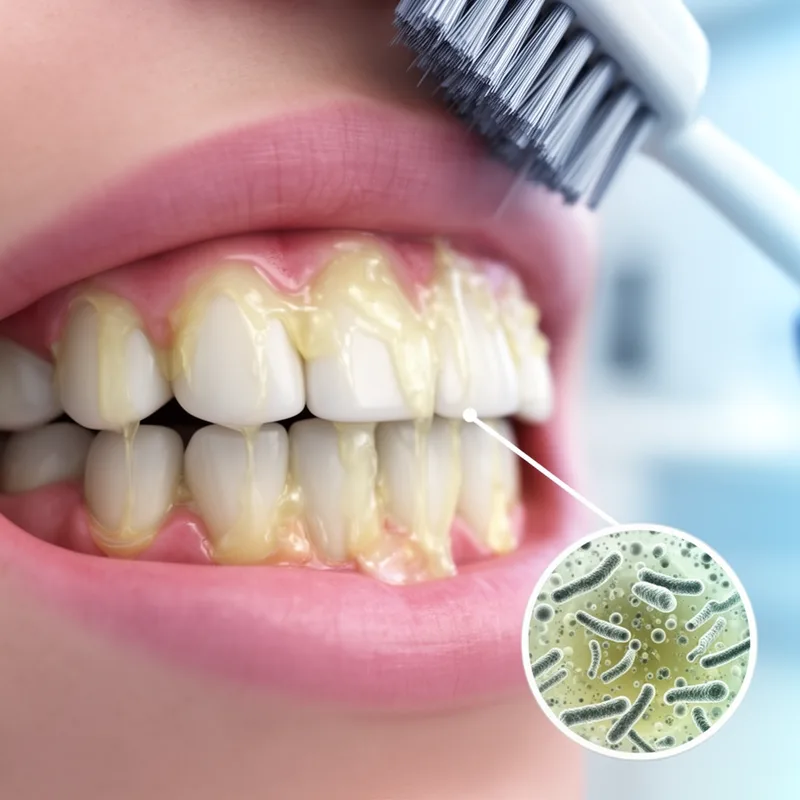
bacterial plaque
- noun
- /bækˈtɪr.i.əl plæk/
- Specialized
- The dentist warned about bacterial plaque buildup.
Examples
-
Regular brushing helps prevent the buildup of bacterial plaque on your teeth.
-
Dentists recommend flossing daily to remove bacterial plaque from between the teeth.
-
If not treated, bacterial plaque can harden into tartar, increasing the risk of gum disease.
-
Brushing removes bacterial plaque effectively.
-
If left untreated, bacterial plaque can lead to serious dental issues like cavities and gum disease.
-
Bacterial plaque forms on your teeth if you don't brush and floss regularly.
-
Regular dental cleanings help remove bacterial plaque before it causes damage to your teeth.
Synonyms

 33
7.4
33
7.4

A small spot that forms in the body, for example on teeth or inside arteries
 2
6.5
2
6.5
A thin layer of tiny living things that stick together and to surfaces, making a slimy coat


 1
3.0
1
3.0
A soft sticky film of germs that forms on teeth and can cause tooth decay
How Hardened

Surface Forms
Morphology
The meaning is directly compositional: the adjective 'bacterial' specifies that the 'plaque' (a deposit or patch) is caused by or composed of bacteria, so it straightforwardly denotes a bacterial deposit on tissues such as teeth. This adjective+noun pattern is common cross-linguistically and follows regular English composition, so a B1 learner who knows both constituents can infer the meaning.
Etymology
Bacterial plaque names the sticky film that builds up on teeth. Bacterial means tiny germs and plaque is a soft coating. Picture a thin, sticky layer of germs and food on your teeth that can harden and cause 'tooth decay' and 'gum disease', so the phrase reminds you that this harmful film must be brushed and flossed away.