

bacteria family
- noun
- /bækˈtɪəriə ˈfæmɪli/
- Specialized
- The bacteria family Lactobacillaceae includes many species used in food fermentation.
Examples
-
Many bacteria families play crucial roles in ecosystems.
-
The bacteria family includes various genera.
-
Each bacteria family is distinguished by unique genetic characteristics.
-
Scientists discovered a new bacteria family in the deep-sea hydrothermal vents.
-
The researchers identified several different bacteria families in the soil sample.
-
Understanding the characteristics of various bacteria families can help improve disease prevention.
-
This classification chart shows how bacteria families are related to one another.
Synonyms
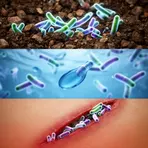
A group of rod-shaped bacteria often found in soil, water, and wounds

A large group of bacteria like E. coli and Salmonella that can cause infections

A large group of spiral-shaped bacteria that live in water or in oysters

A family of bacteria that turn sugars into lactic acid and include types that help make yogurt or cause disease
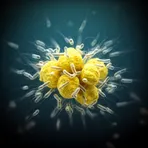
A group of small moving bacteria that use sulfur to live
Surface Forms
Morphology
The meaning is directly compositional: 'family' as a scientific grouping combined with 'bacteria' yields a group of related bacteria, so a learner who knows both words can infer the taxonomic sense. This noun + noun/NP composition is cross-linguistically common and follows standard semantic combination, making it immediately understandable to a B1 learner.
Etymology
Bacteria family comes from the everyday idea of a 'family', people who are related and share traits. In biology, a family groups together different groups of bacteria called 'genera' that are closely related, so the term means 'a group of related bacteria'.

