
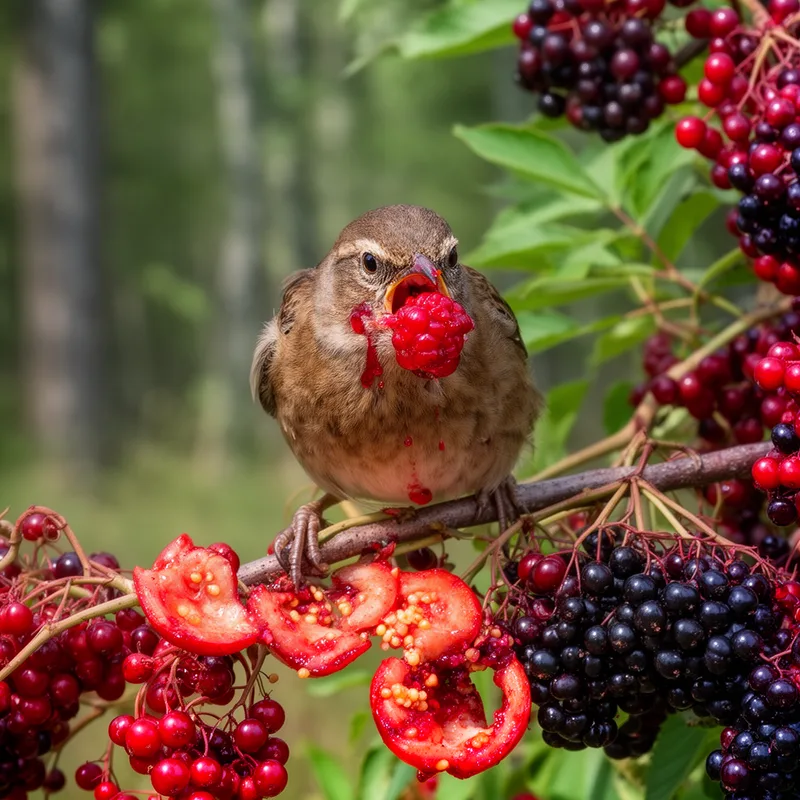
baccivorous
- adjective
- /bækˈsɪvərəs/
- Specialized
- Many birds are baccivorous, especially during late summer when berries are abundant.
Examples
-
The baccivorous birds flocked to the berry bushes.
-
The baccivorous diet of the species helps disperse seeds across the forest.
-
Some mammals, though mainly insectivorous, occasionally display baccivorous tendencies.
-
Look at that baccivorous bird!
-
During autumn, many baccivorous birds gather in the fields to feast on ripe berries.
-
You can often see baccivorous animals like thrushes and waxwings foraging for berries in the wild.
-
The baccivorous habits of the local birds help in the growth of berry plants by spreading their seeds.
Synonyms

An animal that eats mostly fruit as its main food

An animal that eats mostly fruit
How Frugivorous
- Specialized

- Specialized
Surface Forms
Morphology
baccivorous = bacci + vor + ous
This is a learned classical formation meaning 'berry-eating', but its components are not ordinary English words for most learners.
Etymology
Baccivorous comes from the Latin bacca 'berry' and the ending -vorous 'eating', the same idea as in carnivorous ('meat-eating'). So a baccivorous animal is a 'berry-eater', which explains why it feeds on berries.

