
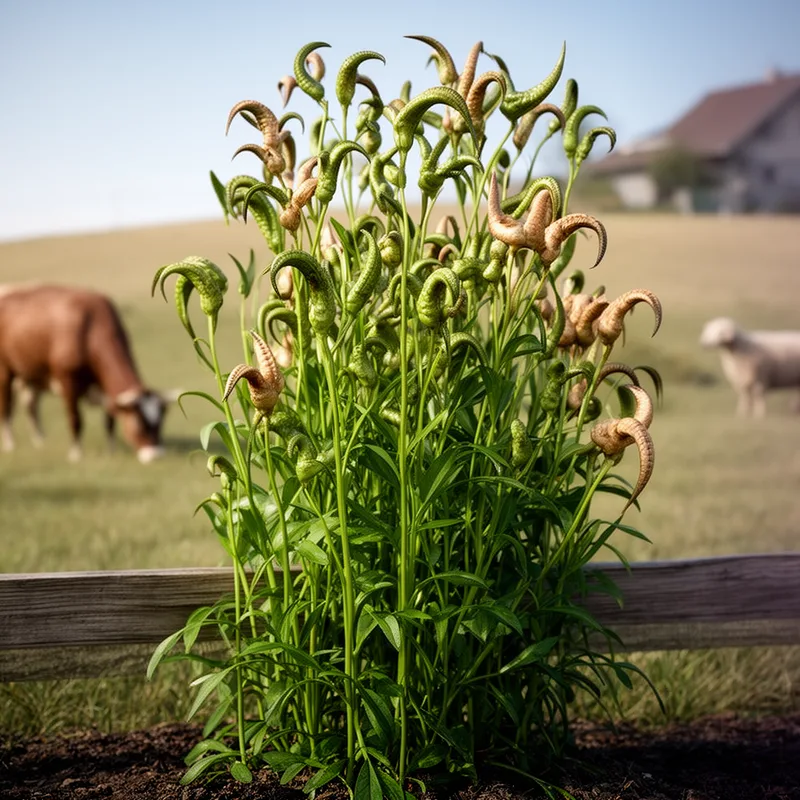
babies' slippers
- noun
- Gardeners sometimes grow babies' slippers along fence lines for their unusual claw-shaped pods and texture.
Examples
-
Researchers studied the seed pods of babies' slippers to understand why livestock avoid grazing them.
-
In this region, farmers find that babies' slippers tolerate cold winters and poor soils well.
-
The botanist examined the babies' slipper plant closely.
-
Do you know where babies' slippers grow naturally?
-
Farmers often plant babies' slippers because of their hardiness in challenging conditions.
-
The unique claw-shaped pods of babies' slippers make them a fascinating addition to any garden.
-
Botanists appreciate babies' slippers for their ability to thrive in poor soil conditions.
Synonyms

A low, long-lived plant with yellow flowers and claw-shaped seed pods used for farm animal feed
A small European plant with claw-shaped pods that farm animals eat

A small plant with yellow flowers and seed pods like a bird's foot often grown for animals to eat

A small European wild plant with bright yellow and orange flowers
Surface Forms
Morphology
babies' + slipper
The literal composition 'babies' slippers' denotes small indoor shoes belonging to babies, which is the straightforward reading for a learner who knows the two words. The botanical sense (a specific European forage plant) is a lexicalized name that cannot be predicted from the constituents alone and functions as a specialized idiomatic label, so a B1 learner would not infer the plant meaning from the parts.
Etymology
Babies' slippers comes from the shape of its seed pods, which look like tiny, claw-like slippers or little shoes. Because people thought the pods looked like baby shoes, the name stuck, so today babies' slippers refers to this European plant with claw-shaped pods.

