
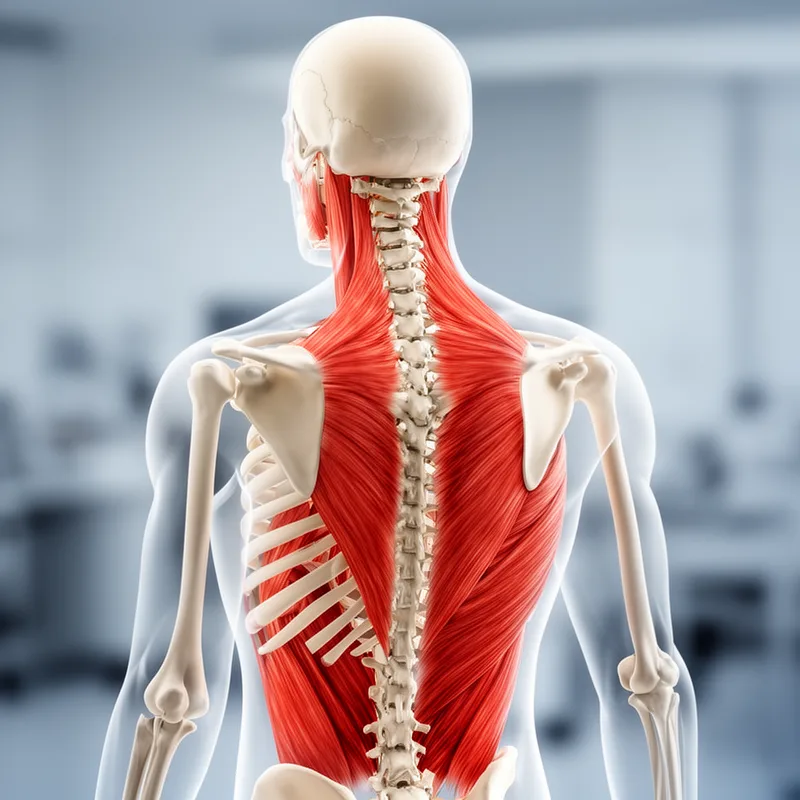
axial muscle
- noun
- /ˈæk.si.əl ˈmʌs.əl/
- Specialized
- Strengthening your axial muscle is essential for improving your posture and stability.
Examples
-
Yoga can help develop your axial muscle, leading to better balance and core strength.
-
The athlete focused on building his axial muscle to enhance his performance in various sports.
-
That system for axial muscle control is really a whole body control system and controls things like a locomotion and climbing.
Synonyms

 3
3.8
3
3.8

A body part attached to bones that pulls them to move the body, often with stripes
Surface Forms
Morphology
The meaning is directly compositional: 'axial' (relating to the central axis) combined with 'muscle' yields a muscle associated with the body's axis or trunk/head. This adjective+noun structure is literal and follows normal English composition, so a B1 learner who knows both constituents should be able to infer the meaning.
Etymology
Axial muscle gets its name from the idea of a muscle along the body's main line: axial comes from the word 'axis' (the spine or central line) and muscle is the body part that makes movement. So it means a muscle in the trunk or head that helps move and support the body's main line.