
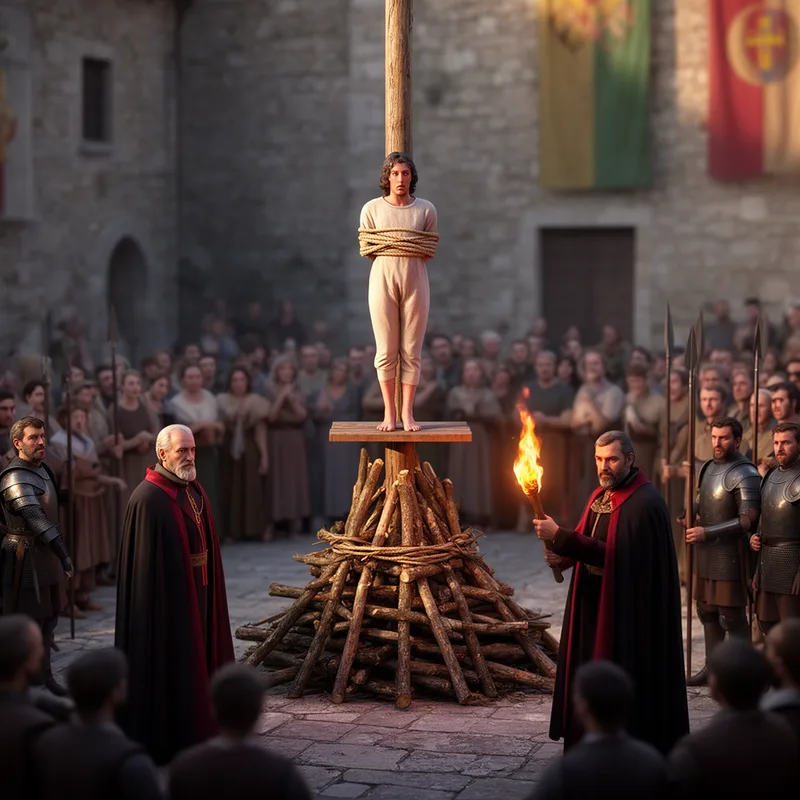
auto-da-fé
- noun
- /ˌɔːtoʊdəˈfeɪ/
- NSFW
- The condemned heretic was taken to the square for the auto-da-fé.
Examples
-
Many historians have studied the auto-da-fé as a symbol of religious intolerance.
-
The chilling scenes of an auto-da-fé are described in several novels set during the Inquisition.
-
The auto-da-fé was a grim spectacle in medieval Spain.
-
Many people gathered to witness the auto-da-fé held in the town square.
-
The last auto-da-fé took place in 1826, marking the end of the Inquisition in Spain.
-
During the auto-da-fé, numerous heretics were publicly condemned for their beliefs.
-
History records that the auto-da-fé served as a chilling reminder of the Inquisition's power over dissenters.
Surface Forms
Etymology
Auto-da-fé comes from Portuguese words auto and fé, meaning 'act' and 'faith'. It named the Spanish Inquisition's public ceremonies where people accused of heresy were punished, often by burning, so the word is tied to that severe public punishment.

