
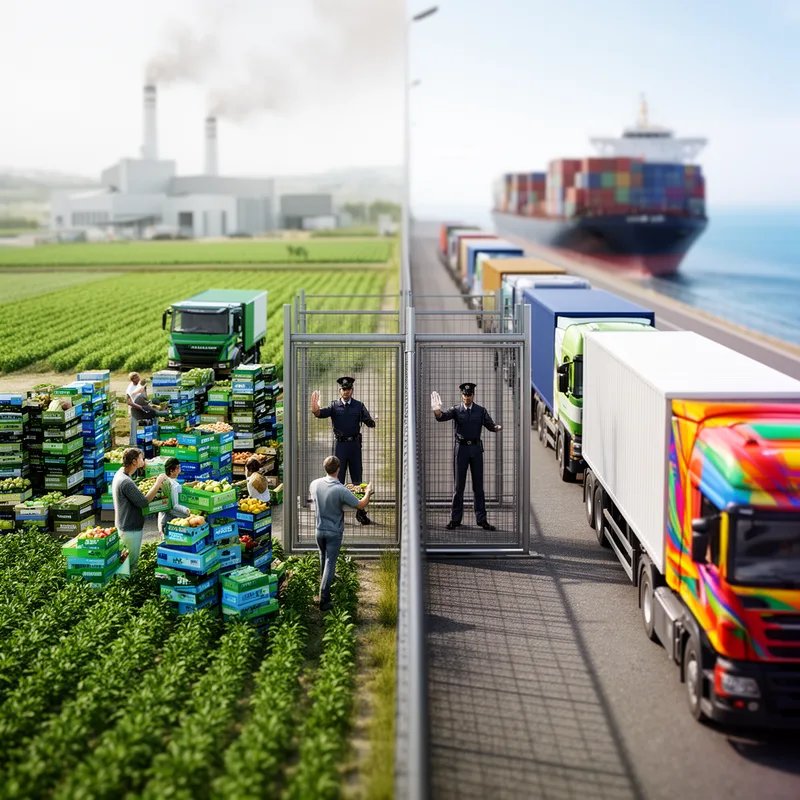
autarchy
- noun
- /ɔːˈtɑːrki/
- Formal
- The Sebsthilfebewegung asserted a highly racialized conception of Germanness and emphasized social and economic autarchy, allowing disengagement from non-Germans.
- economic autarchy
Examples
-
Consequently, a massive industrialization program was implemented in the 1960s, which ended Franco's policy of economic autarchy and resulted in rapid economic growth.
Academic text (1998) -
Put differently, the third autarchy is the fusing and subordinating of all other identifications (e.g., the parish, the township, the region, the ruling dynasty) into the national identification.
Academic text (2002) -
With technological change and the "economic autarchy" thesis, that changes dramatically.
Blog text (31) -
Third, the military, especially the army, has continued to safeguard its extensive economic activities, in part to achieve some degree of economic autarchy, especially in times of economic crisis when its members and corporate interests have been hard hit.
Academic text (2000) -
The government implemented an autarchy to ensure the country could function independently without relying on imports.
-
During the war, the nation adopted an autarchy to avoid dependency on foreign aid and support its economy.
-
The policy of autarchy allowed the country to develop its industries and reduce reliance on external trade.
Synonyms

 10
7.7
10
7.7

A country's choice to avoid political and economic contact with other countries


 1
9.9
1
9.9
A policy where a country makes most goods it needs and avoids imports
Antonyms

How Self-sufficient

Surface Forms
Morphology
autarchy = autarch (opaque) = auto + arch + y
Even if segmented as autarch + -y, the economic meaning 'national self-sufficiency' is not recoverable from the base word for most learners.
Etymology
Autarchy comes from the Greek parts auto ('self') and archy ('rule'), the same pieces you see in autonomy and monarchy. That's why autarchy can mean a country trying to 'rule itself' economically, trying to make and use its own goods without help from other countries.