
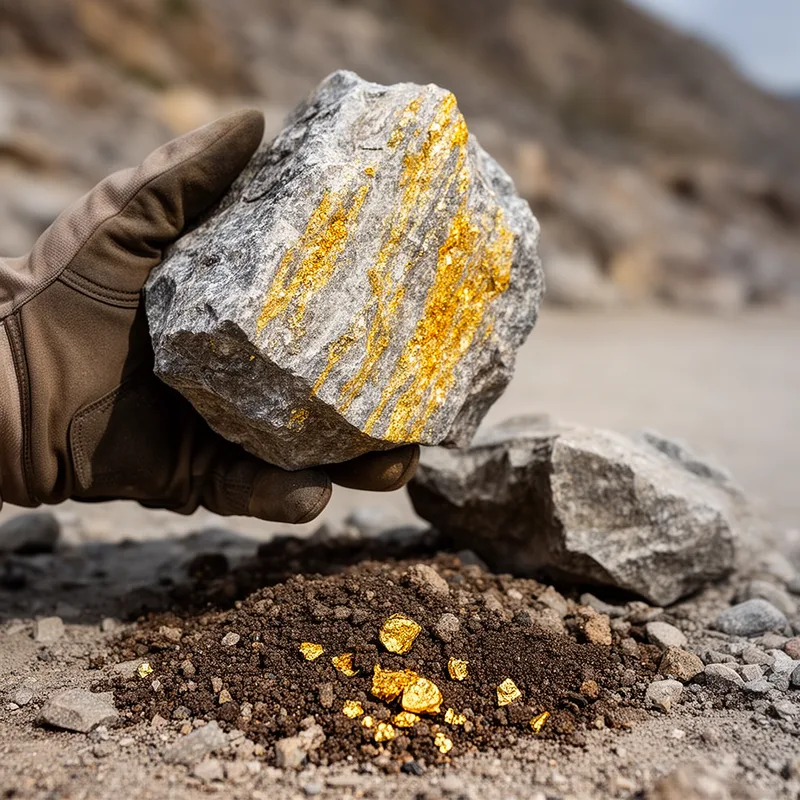
auriferous
- adjective
- /ɔːˈrɪfərəs/
- Specialized
- The geologist identified several auriferous rock samples during the survey.
Examples
-
Mining companies are interested in areas known for their auriferous quartz veins.
-
The geologists analyzed the rocks and found them to be auriferous, indicating the presence of gold.
-
Prospectors are often drawn to regions with auriferous deposits in the soil.
-
The auriferous soil yielded a rich harvest of gold.
-
Many miners seek auriferous deposits in the mountains.
-
The miner was thrilled to discover an auriferous vein during his excavation.
-
Certain riverbeds are known for being auriferous, attracting prospectors seeking gold.
Synonyms

Rock or soil that contains gold

Relating to gold or gold compounds where gold has three positive charges

Containing gold in a chemical form with one positive charge
How Gold-rich


Surface Forms
Morphology
auriferous = auri + ferous
The word is historically built from a classical gold-related stem plus a meaning-bearing suffix, but that structure is not transparent to average English learners.
Etymology
Auriferous comes from the Latin aurum ('gold') and the part -ferous (from ferre, 'to carry'), so it means 'carrying gold'. That's why we use auriferous for rocks or soil that contain or 'bear' gold, in other words 'gold-bearing' ground.