
atrazine
 1
8.5

- noun
- /əˈtræziːn/
- Specialized
- The three most common pesticides found in groundwater are the insecticide aldicarb and the herbicides alachlor and atrazine (Osteen and Szmedra 1989).
- atrazine herbicide
- atrazine and alachlor
- atrazine and metolachlor
Loading YouTube…
Watch on YouTubeNow it's very well known now that atrazine is in many herbicides.
- Now it's very well known now that atrazine is in many herbicides.
Examples
-
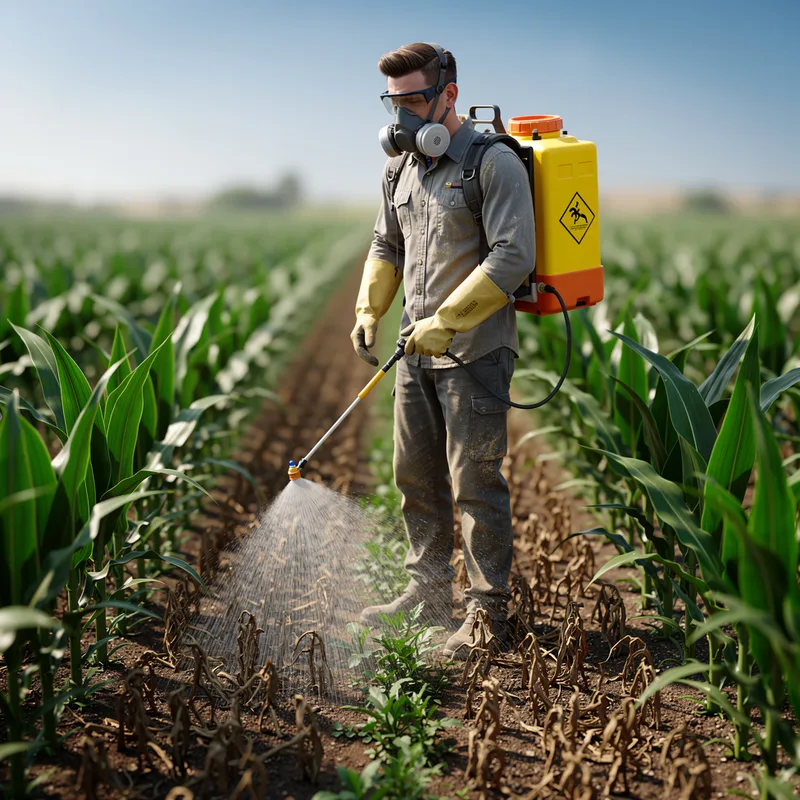
So they plant the corn, but before the corn sprouts, they'll spray the landscape with the atrazine often in the spring.
-
In one study, conducted from 1992 to 1994, the scientists tracked the movement of two common herbicides, atrazine and alachlor.
Academic text (1998) -
Then they found atrazine in the Great Lakes as well.
-
Now it's very well known now that atrazine is in many herbicides.
-
Corn farmers still love atrazine; however, rates are lower than they were before the '90s.
Blog text (14) -
Samac worked with University of Minnesota scientists to create plants that detoxify atrazine.
Academic text (2002) -
The Fort Wayne, Indiana, municipal treatment plant specially treats its water with activated charcoal to remove atrazine.
Academic text (2005) -
The concern is that drainage discharge water can carry pollutants such as the herbicide atrazine, sediment, and nutrients to surface waters.
Academic text (2005) -
Atrazine—a widely used herbicide—can be carried to reservoirs by drainage discharge water and other water runoff.
Academic text (2005) -
Farmers often rely on atrazine to control weeds in their corn crops effectively.
Synonyms
 5
3.2
A substance that kills unwanted plants in gardens or on lawns
Surface Forms
Etymology
Atrazine comes from the chemical family name triazine, where tri- means 'three' and -azine is a chemical ending. A helpful image is a small 'three' ring in the molecule, and because atrazine is one of those triazine chemicals, its name tells you it is a kind of weed killer used on crops.