
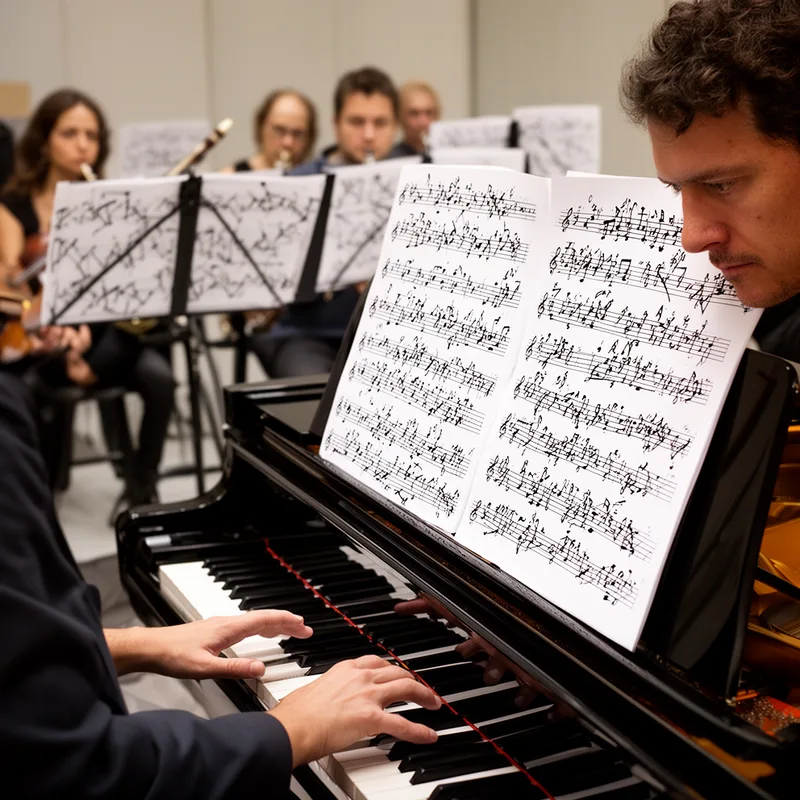
atonalistic
- adjective
- /ˌeɪtəˈnælɪstɪk/
- Specialized
- The composer's new work is highly atonalistic, challenging the listener's sense of harmony.
Examples
-
The composer embraced an atonalistic style in his latest symphony.
-
Some critics argue that atonalistic techniques can create emotional distance in music.
-
Her dissertation focuses on the atonalistic tendencies in twentieth-century symphonies.
-
She finds atonalistic music to be quite challenging.
-
The composer's new work is highly atonalistic, challenging the listener's sense of harmony.
-
Some critics argue that atonalistic techniques can create emotional distance in music.
-
Her dissertation focuses on the atonalistic tendencies in twentieth-century symphonies.
Synonyms

 3
9.1
3
9.1

Music that has no key and avoids normal chords
Antonyms

How Tonal
- Specialized
1
6.9

- Specialized
Surface Forms
Morphology
Etymology
The word atonalistic comes from the small part a- meaning 'not' and tonal from tone, a 'musical note' or 'key'. So atonalistic describes music that is 'not' built on a clear tone or key and lacks traditional harmony.