
athetosis
- noun
- /əˈθiːtəʊsɪs/
- Specialized
- Children with cerebral palsy sometimes display athetosis affecting their hands and facial muscles.
Examples
-
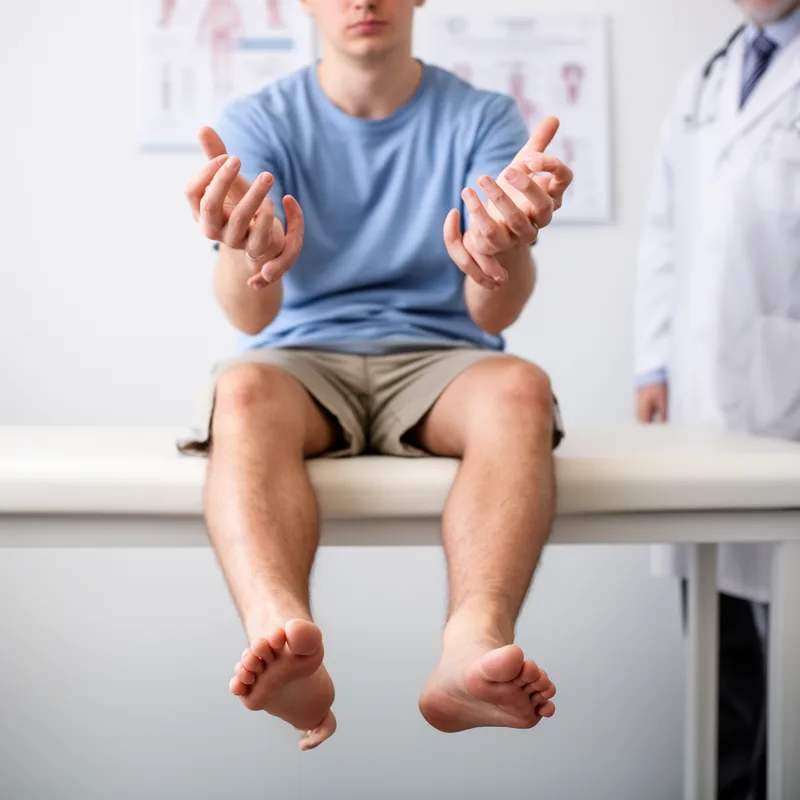
The patient exhibited clear signs of athetosis during the neurological examination.
-
The patient was diagnosed with athetosis after the examination.
-
Athetosis can make writing and other fine motor tasks challenging.
-
Don't underestimate the challenges of athetosis!
-
Athetosis can make writing and other fine motor tasks challenging.
-
The patient exhibited clear signs of athetosis during the neurological examination.
-
Children with cerebral palsy sometimes display athetosis affecting their hands and facial muscles.
Synonyms

 2
9.9

Movements of the body that happen without a person controlling them, often fast or jerky
Antonyms

How Severe
- Specialized

- Specialized
2
9.9
Surface Forms
Morphology
athetosis = a + theto + osis
Built from Greek combining elements (a- + theto + -osis); the central combining form is not a standalone English word and the medical sense is not recoverable by typical learners.
Etymology
Athetosis comes from Greek parts a- meaning 'not' and thetos meaning 'placed' or 'in position'. So it literally means 'not in a fixed position', which helps you remember the condition where the hands and feet make slow, continuous movements that you cannot control.