
astrometric
 4
9.3

- adjective
- /ˌæstrəˈmɛtrɪk/
- Specialized
- The recently released data of very high precision from HIPPARCOS, the astrometric satellite of the European Space Agency, confirm the proper motions of these stars derived from previous ground-based observations.
- astrometric resolution
Examples
-
The photometric monitoring of so many stars would also measure their long-term motions to better than about 0.001 seconds, making the mission an astrometric hunt for planets as well.
Academic text (1996) -
The astrometric measurements allowed astronomers to track the movement of distant planets.
-
In the astrometric method, they look for the slight periodic motion of the star in the sky.
Academic text (1996) -
According to our astrometric readings, the year is 2063.
Fiction book (1994) -
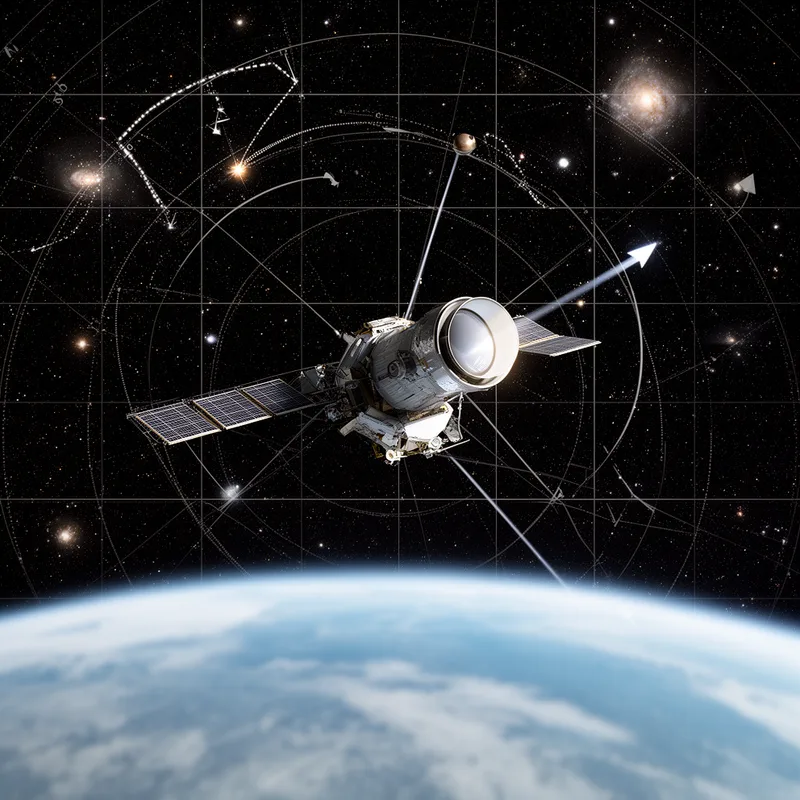
His idea for an astrometric spacecraft took shape gradually in the form of the HIPPARCOS satellite, which was launched by the European Space Agency in 1989.
Academic text (2005) -
Lacroute quickly understood the importance of artificial satellites and the gain in precision that could be obtained from astrometric measurements collected outside Earth's atmosphere.
Academic text (2005) -
The successive German directors conducted various astrometric surveys, including precise determinations of positions of nebulae, double stars, and circumpolar stars.
Academic text (2005) -
Very precise astrometric measurements would show the centroid of a star executing an ellipse on the sky over the full period of a planet with sufficient pull.
Academic text (2004) -
The result is two catalogs: the primary catalog, Hipparcos, lists 118,000 stars with milliarcsecond astrometric resolution and photometric precision of 0.2%.
Academic text (1997) -
The auxiliary catalog, named Tycho in honor of the last great naked-eye astrometer, contains a million less-well-measured stars, with an astrometric resolution of 2.5 milliarcseconds and a photometric precision of 6%.
Academic text (1997)
Surface Forms
Morphology
Etymology
The word astrometric comes from astro- meaning 'star' and -metric meaning 'measure', just like in astronomy and the common meter. So astrometric work is about 'measuring stars' and their positions and movements.