
asparagine


 1
9.9
- noun
- /əˈspærəˌdʒin/
- Specialized
- In our next example, we observed the consequences of the removal of two non-essential amino acids from the medium, namely asparagine and glutamine.
- asparagine and glutamine
- asparagine from the medium
Examples
-
In our first perturbation analysis, we simulated the removal of asparagine from the medium.
Academic text (2017) -
When asparagine is not present in the medium, the asparagine synthase gene expression is increased.
Academic text (2017) -
That element corresponds to the rate of change of cytosolic asparagine.
Academic text (2017) -
Asparagine is synthesized from aspartate with the reaction catalyzed by asparagine synthase.
Academic text (2017) -
Asparagine and glutamine biosynthesis reactions are inactive when asparagine and glutamine are available in the medium.
Academic text (2017) -
Acrylamide forms from a reaction between sugars and an amino acid (asparagine) during high-temperature cooking.
Blog text (7) -
Asasparagine is a crucial component in the structure of many proteins.
-
The body can produce asparagine from other amino acids during times of need.
-
Asparagine is found abundantly in asparagus, giving it nutritional value.
Surface Forms
Morphology
asparagine = asparagus (semi-transparent) = asparagin + ine
The form shows a clear link to 'asparagus' plus the chemical-forming suffix '-ine', but the specific technical meaning 'a particular amino acid' is specialized and not derivable by a general learner.
Etymology
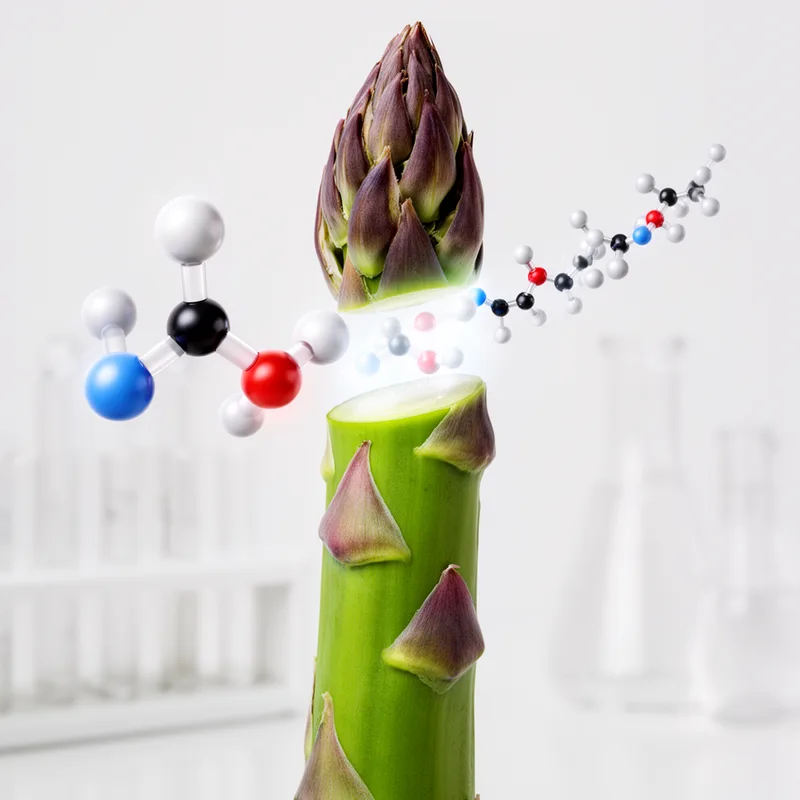
Asparagine comes from the plant asparagus, because it was first taken from that vegetable, and the ending -ine is used for chemicals such as caffeine. So, asparagine is an amino acid, a small building block of proteins, which is why it is found in asparagus and in many living things.