
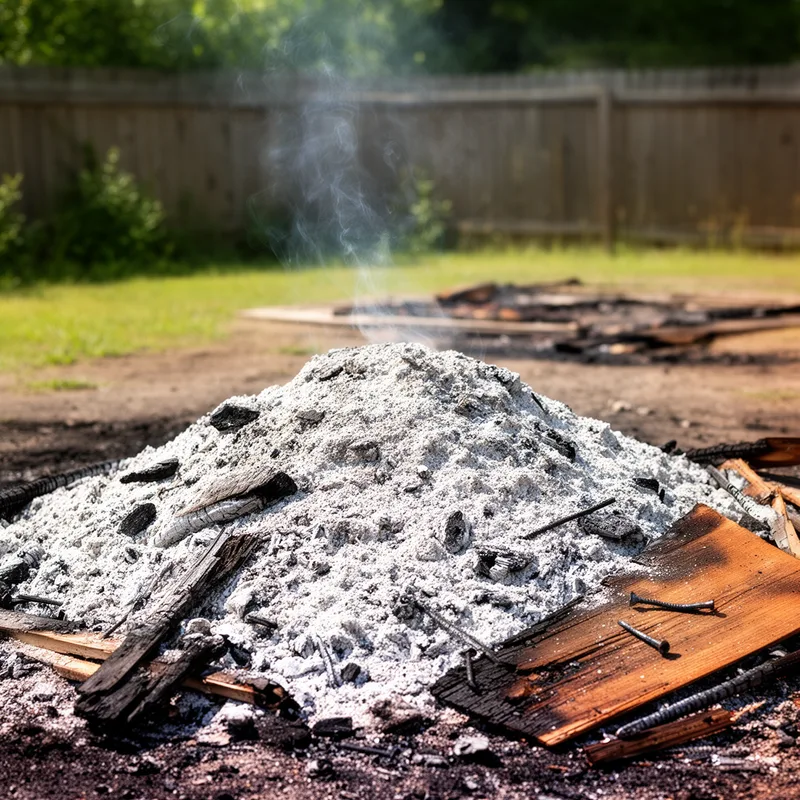
ash heap
- noun
- /æʃ hiːp/
- The children played near the ash heap, watching the embers glow in the dusk.
Loading YouTube…
Watch on YouTubeBut long term, the facts will happen so that if there is climate change, people who have denied climate change will be thrown into the ash heap of history.
- But long term, the facts will happen so that if there is climate change, people who have denied climate change will be thrown into the ash heap of history.
Examples
-
After the fire was put out, only an ash heap remained where the shed had stood.
-
He tossed the burnt wood onto the growing ash heap in the corner of the yard.
-
The children played near the old ash heap behind the factory.
-
Look at that ash heap!
-
What is an ash heap?
-
After the campfire was over, we found an ash heap where the logs had burned.
-
In the backyard, there was a tall ash heap left from the burned branches last fall.
Synonyms

 426
1.9
426
1.9

A heap of things put together
 53
1.1
53
1.1
A pile of things put on top of each other in no order
 37
2.1
37
2.1
A small pile of things put on top of each other
A pile of ashes left after burning wood or coal
How Big
214
1.1

Surface Forms
Morphology
The meaning 'a pile of ashes' is compositionally derived from the constituents 'ash' (powdery residue after burning) and 'heap' (a pile), so the overall sense is literal and predictable. This is a straightforward noun–noun combination following common cross-linguistic compounding patterns and is not idiomatic, so a B1 learner who knows both words would understand it.
Etymology
The noun ash heap comes from the simple image of ashes piled in one place after a fire, with the words ash and heap showing the parts. So it means 'a pile of ashes'.