
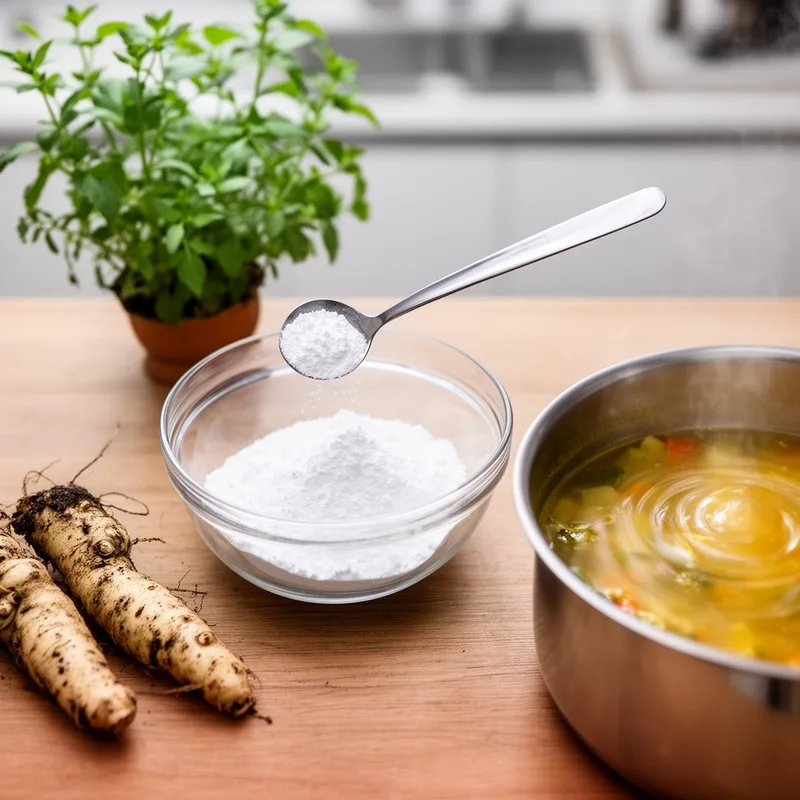
arum
- noun
- Archaic
- The chef used arum to thicken the sauce.
Examples
-
In some regions, arum was traditionally used as a thickener in soups and stews.
-
People once collected arum from wild plants before commercial starches became widely available.
-
The chef experimented with arum to create a unique texture in his dessert.
-
I bought some arum from the local market.
-
In some regions, arum was traditionally used as a thickener in soups and stews.
-
People once collected arum from wild plants before commercial starches became widely available.
-
The chef experimented with arum to create a unique texture in his dessert.
Compounds

- Specialized
A plant with large dark purple flowers that makes a strong unpleasant smell
- Specialized
A North American water plant with arrow-shaped leaves and greenish flower spikes

- Specialized
A group of flowering plants like peace lilies and philodendrons with showy flowers

- Specialized
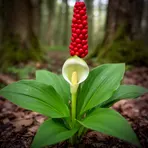
A common European woodland plant with arrow-shaped leaves, a small hooded flower, and poisonous red berries
- Specialized
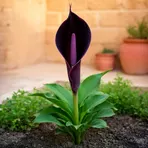
A plant from the Middle East with a dark purple showy flower grown in gardens

- Specialized
A group of plants with thick roots and heart-shaped leaves from Europe and Asia

A plant that lives for many years with arrowhead leaves, a long pointed flower cover, and green berries

An indoor climbing plant with green and yellow patterns on its leaves that keeps them all year

- Specialized
A very large tropical plant with a huge flower that smells like rotten meat when it blooms
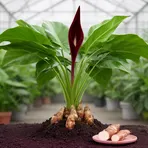
- Philippine
A tropical plant with large leaves, a dark red flower-like part, and edible underground stems
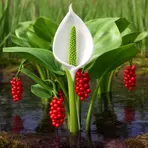
A plant that grows in ponds and marshes with a white part around green flowers and red berries
Surface Forms
Etymology
The word arum was also used for a starchy food made from the plant's root, like 'sago', so arum can mean both the plant and the thickener made from its roots.

