
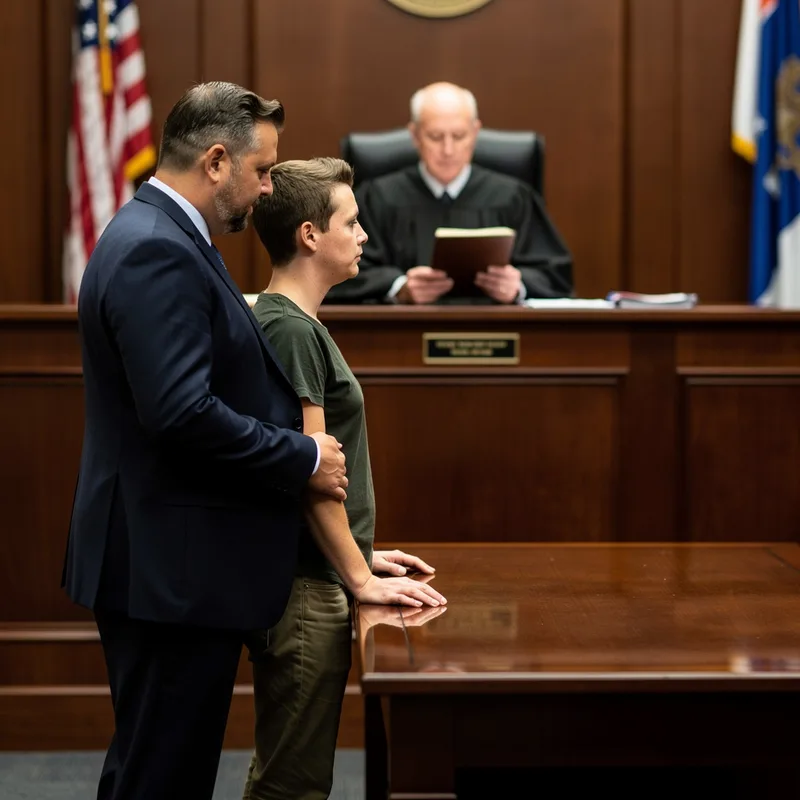
arraignment
 62
9.3

- noun
- /əˈreɪn.mənt/
- Formal
- I'll see you at the arraignment.
- arraignment in court
- arraignment on charges
- arraignment hearing
Loading YouTube…
Watch on YouTubeAnd they said that's the, and the, he was being brought in for his arraignment.
- And they said that's the, and the, he was being brought in for his arraignment.
- The New York Police Department is expecting to shut down most of the streets around where this indictment and the arraignment will be held.
- He didn't speak after the arraignment as the mainstream media told us they were confident that he would.
- They've just totally skipped the indictment, the arraignment, all the pretrial exchange of of material, Brady disclosures, investigations.
- And at my arraignment they, the judge, read off my sentence, read my sentence, you know what I was looking at.
Examples
-
Today, I went down to Central Booking in Manhattan for the arraignments of the 24 people arrested.
Blog text (14) -
The clerk of the court was already calling out the case number for the next arraignment.
Fiction book (1991) -
Check the time of arraignment, and get over there.
-
Just take the arraignment, wait for the plea.
-
Just make a motion tomorrow morning at the arraignment.
-
The court will appoint a lawyer at arraignment.
-
The judge decided to skip arraignment and take Milo directly to trial.
Fiction book (1993) -
A not-guilty plea was entered on his behalf during his arraignment via video feed.
Blog text (34) -
I'm not about to let you jeopardize yourselves by missing your arraignment.
Fiction book (1991) -
During the arraignment, the defendant was formally charged with multiple offenses and asked to enter a plea.
Surface Forms
Morphology
Etymology
Arraignment comes from the old verb arraign, which meant 'to call to answer' in a court or before a judge, so it named the moment a person was brought to hear charges. So an arraignment today is the formal court event when someone is officially charged and must answer the accusations.