
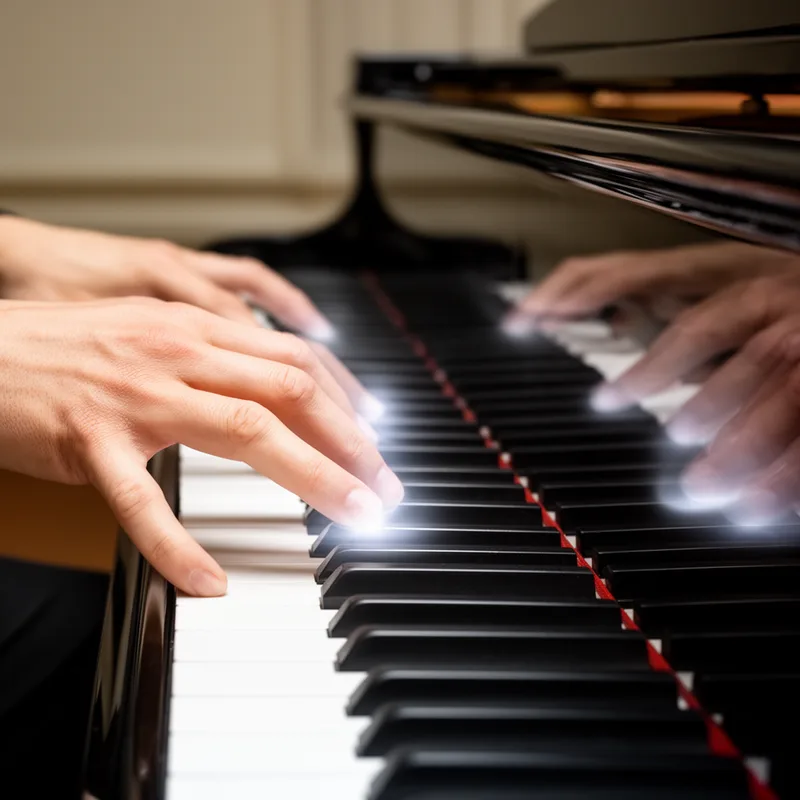
to arpeggiate


 1
8.9
- verb
- /ɑːrˈpɛdʒiˌeɪt/
- Specialized
- The guitarist decided to arpeggiate the rather complex chord progression during the song.
Loading YouTube…
Watch on YouTubeThe opening idea goes right up the arpeggiate.
- The opening idea goes right up the arpeggiate.
Examples
-
Students may decide to arpeggiate or otherwise break the chords.
Academic text (1999) -
The arrangement features a mash-up of spacey synthesizers, arpeggiated harp flourishes, and a breakbeat reminiscent of The Beatles' "Tomorrow Never Knows."
Blog text (21) -
There's no J. Scott Skinner arpeggiated strathspeys here, and there are some tunes that hardly sound Scottish at all, like the beautiful slow tune "Tomnahurich."
Blog text (25) -
It can produce complex chords and arpeggiated textures as readily as single-note melodies.
Academic text (2010) -
What rapture to arpeggiate the typist's mantra, "Now is the time for all good men to come to the aid of their country," to the rousing melody of the concerto's first movement!
Academic text (2005) -
The Alberti bass arpeggiated sixteenth-note figures that lie so well in the clarinet's low register can be played as quarters or eighths on the lowest notes of the figures.
Academic text (2000) -
In her piano recital, she chose to arpeggiate the chords instead of playing them all together.
-
To create a soothing atmosphere, the musician would often arpeggiate the chords slowly.
Synonyms
To play chord notes quickly one after another
Surface Forms
Morphology
Etymology
The word arpeggiate comes from the Italian arpeggio, from arpa meaning 'harp'. An arpeggio is playing the notes of a chord one after another like plucking the strings of a harp, so to arpeggiate is to play a chord in quick steps instead of all at once.