
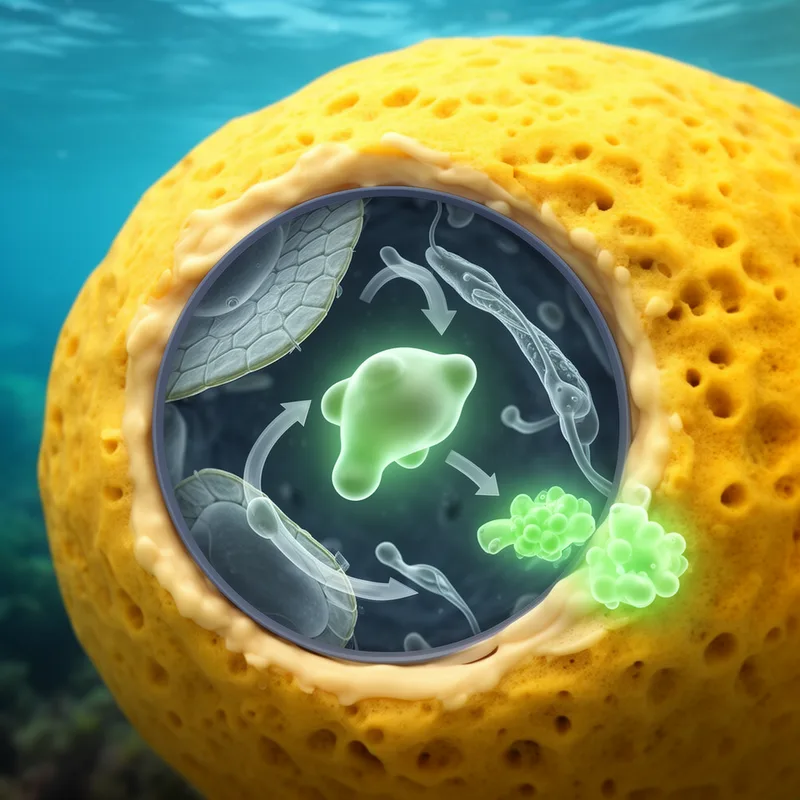
archeocyte


 1
9.9
- noun
- /ˈɑrkɪoʊˌsaɪt/
- Specialized
- The sponge's archeocytes play a vital role in its regeneration.
Examples
-
Scientists study archeocytes to understand how sponges repair themselves after injury.
-
An archeocyte can transform into various specialized cells.
-
The archeocyte is essential for the sponge's ability to regenerate lost parts.
-
Without archeocytes, sponges would not be able to replace damaged or aging cells.
-
An archeocyte can develop into various cell types, making it crucial for a sponge's regeneration.
-
During the sponge's growth, an archeocyte might transform into a specialized cell like a nerve cell.
-
Researchers study archeocytes to understand how sponges heal and regenerate after injury.
How Differentiated
93
3.4

- Specialized
1
9.9
Surface Forms
Morphology
archeocyte = cyte (opaque) = archeo + cyte
The prefix 'archeo-' suggests ancient or primitive, but the specific biological meaning is specialized and not easily inferred from the parts.
Etymology
The word archeocyte comes from Greek parts archeo- meaning 'beginning' and -cyte meaning 'cell'. So an archeocyte is like a 'first' cell that can turn into other cells, which is why sponges use it to regrow lost parts.