
archaic
 2
9.3
2
9.3

- adjective
- /ɑrˈkeɪɪk/
- Specialized
- The people from Windover were an Archaic period society of hunter-gatherers who archaeologists believe traveled in bands of about 50 individuals.
- archaic cetaceans
- Archaic period
- archaic form
Loading YouTube…
Watch on YouTubeAnd those sections are going to give us our best glimpse into how those very archaic, primitive Israelites understood their God.
- And those sections are going to give us our best glimpse into how those very archaic, primitive Israelites understood their God.
- So we have the archaic level, which links to the soil and all the seed forces or ideas that create life on earth.
- And the same is true for these other archaic forms of life with the DNA is saying, Andre, and this is is a mind blower because we don't have to speculate about this piece.
- I heard about this, this giant like dinosaur archaic creature that lived in this, in this lake in Scotland.
Examples
-
Unlike primitive terrestrial mammals, archaic cetaceans have no basins (depressed areas) on their lower molars.
Academic text (2001) -
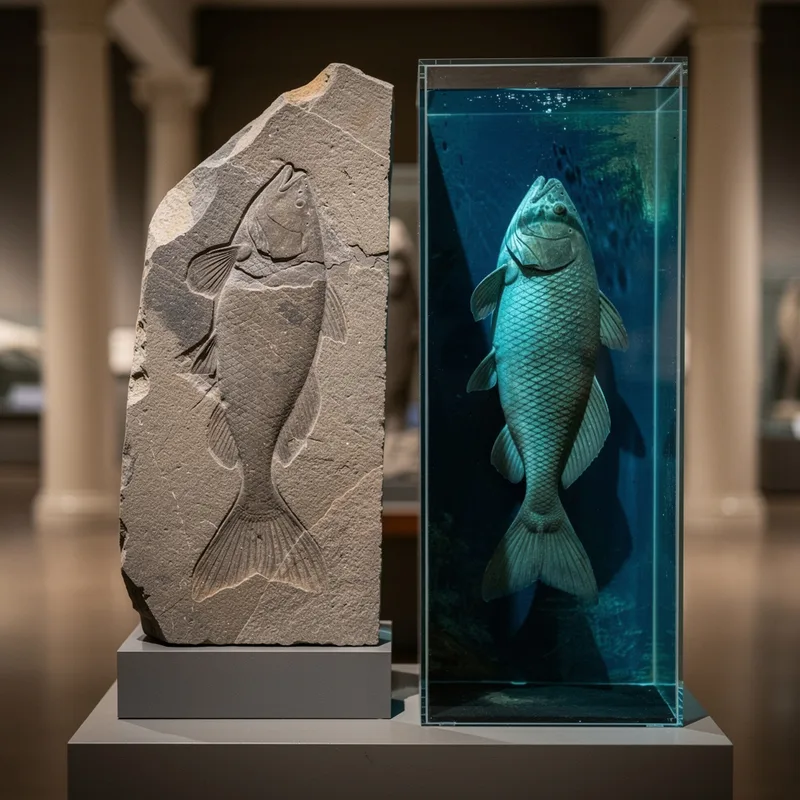
The fossilized remains of the fish reveal an archaic species that has changed little over millions of years.
-
So we have the archaic level, which links to the soil and all the seed forces or ideas that create life on earth.
-
Of course, a myth may very well represent archaic memories of more than one event of similar impact.
Academic text (1995) -
Perhaps someday, you could give me a history lesson... in the archaic ways of our ancestors.
-
Without those animals to prey on, Archaic peoples relied on smaller animals and plants for their food.
Academic text (2011) -
Shamanism is the most archaic form of healing practice of which we are aware.
Academic text (1990) -
One of the most archaic Romanian forms of the dance, namely the one from Lapus, has a funeral function.
Academic text (2000) -
Linguists study archaic dialects to understand how modern languages have evolved over time.
-
The museum displayed an archaic version of the wheel, showcasing its design from ancient times.
Synonyms
 183
5.1
183
5.1
From an early stage of development that is simple and not advanced
Antonyms

How Primitive

Surface Forms
Morphology
archaic = archae + ic
The formation uses a classical combining form rather than a common English base, so the specific scientific/biological sense is not transparently derivable by average learners.
Etymology
The word archaic comes from the Greek arkhaios, meaning 'ancient', and the same root appears in archaeology. So when scientists call a species archaic, they mean it is an early or 'primitive' form that has changed little from its ancient ancestors.