
archaebacterium
- noun
- /ˌɑrkiˈbæktəriəm/
- Archaic
 :
arqueobacteria
:
arqueobacteria
- Recent research has revealed surprising genetic diversity within the archaebacterium lineage.
Examples
-
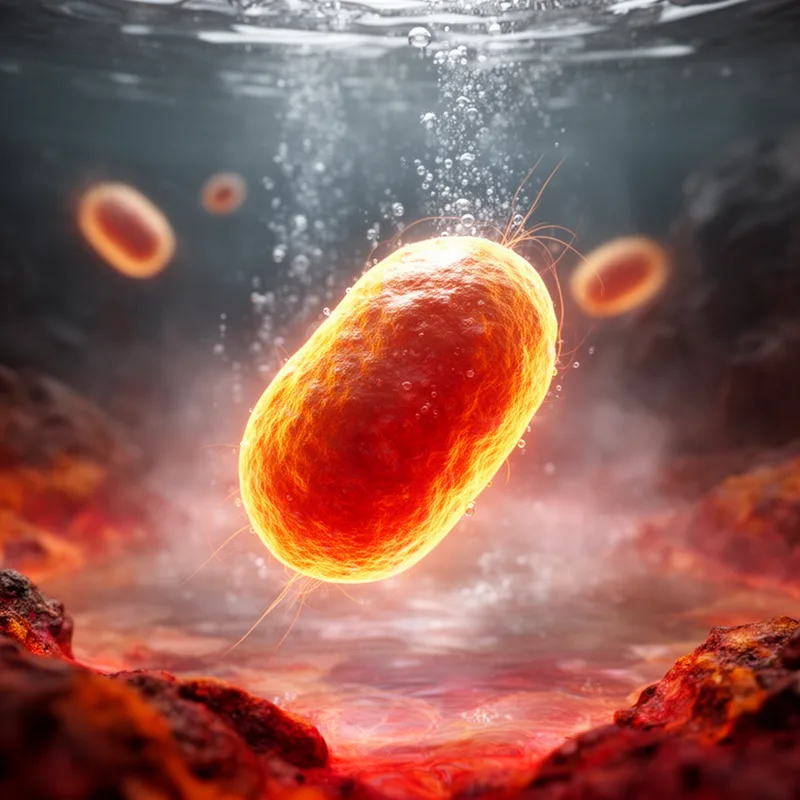
The archaebacterium can survive extreme environments, such as hot springs and salt lakes.
-
Many scientists now classify the archaebacterium as a separate domain from bacteria and eukaryotes.
-
An archaebacterium thrives in extreme environments.
-
Did you know that some archaebacteria can survive in hot springs?
-
An archaebacterium is able to thrive in extreme salt environments, showing unique adaptations compared to other microorganisms.
-
Researchers discovered an archaebacterium that can survive in temperatures hotter than boiling water.
-
The study focused on an archaebacterium from a deep-sea hydrothermal vent, highlighting its ancient lineage and unique metabolic pathways.
Surface Forms
Morphology
archaebacterium = bacterium (semi-transparent) = archae + bacterium
The form clearly suggests 'ancient bacterium', which learners can approximate, but the term is scientific and may mislead about taxonomic distinctions between archaea and true bacteria.
Etymology
The word archaebacterium combines archae- meaning 'ancient', like in archaeology, and bacterium meaning 'bacteria' or 'tiny life'. So an archaebacterium is easy to remember as an 'ancient bacterium', a very old kind of tiny life now usually called archaea that can live in extreme places.

