
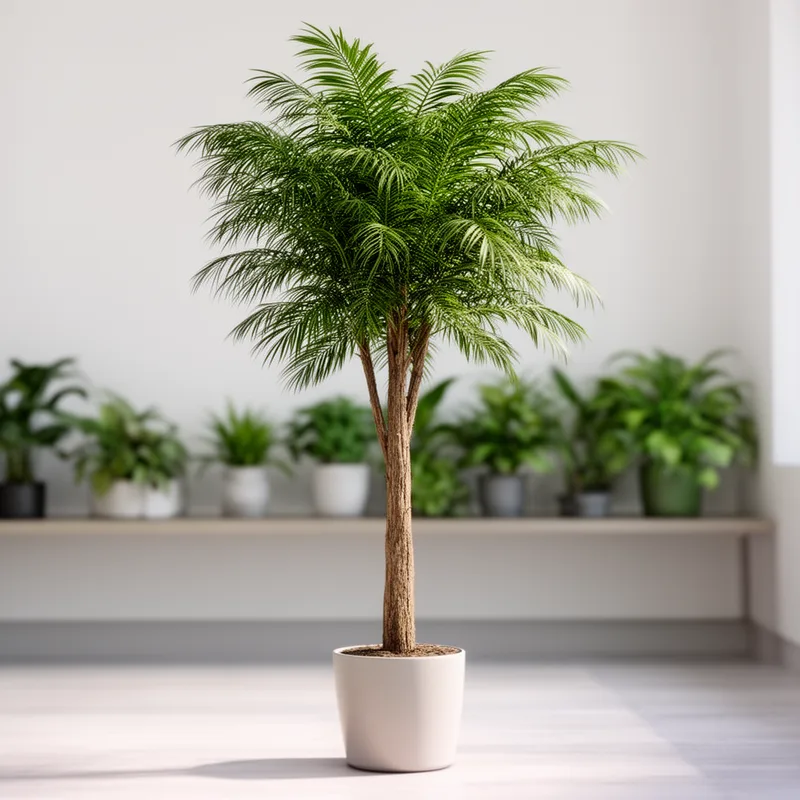
arborescent plant
- noun
- /ˌɑːrbəˈrɛsənt plænt/
- Specialized
- Some ferns have evolved into arborescent plants with woody stems resembling small trees.
Examples
-
The cactus is an arborescent plant that can reach impressive heights in the desert.
-
Botanists classified the unusual specimen as an arborescent plant due to its tall, branching structure.
-
The arborescent plant in my garden is thriving.
-
Many arborescent plants can survive in dry climates.
-
Botanists classified the unusual specimen as an arborescent plant due to its tall, branching structure.
-
Some ferns have evolved into arborescent plants with woody stems resembling small trees.
-
The cactus is an arborescent plant that can reach impressive heights in the desert.
How Tree-like


Surface Forms
Morphology
The adjective 'arborescent' means 'tree-like' and when combined with 'plant' it directly yields the compositional meaning 'a tree-like plant'. Although 'arborescent' is somewhat formal/technical, its meaning is morphologically transparent (from 'arbor' = tree) and cross-linguistically recognizable, so a learner who knows both constituents will be able to infer the phrase's meaning.
Etymology
Arborescent plant comes from the part arborescent, which means 'tree-like', and the word plant, so it paints the picture of a plant with a single stem and many branches. That's why it means 'a plant that looks or grows like a tree'.