
apraxia


 1
9.9
1
9.9
- noun
- /əˈpræksiə/
- Specialized
- If it is apraxia rather than aphasia that affects gestures' informativeness, then speakers with aphasia who do not have apraxia are expected to gesture especially informatively.
- apraxia test
- mild apraxia
- severe apraxia
Examples
-
In addition, we addressed the relative effect of aphasia and apraxia by separately comparing the "moderate" and "high-score" levels to the verbal and nonverbal control group.
Academic text (2013) -
Our results also suggest it may be limb apraxia, which often co-occurs with aphasia, rather than aphasia itself that affects the informativeness of gesture.
Academic text (2013) -
In the analysis with groups based on speakers' scores on the apraxia test, similar results were found.
Academic text (2013) -
We found similar results with groups based on speakers' scores on the apraxia test.
Academic text (2013) -
We found similar results in the analysis with groups based on speakers' scores on the apraxia test.
Academic text (2013) -
Hence, this technique may be of particular help to speakers who score well on an assessment of apraxia.
Academic text (2013) -
Both the degree of aphasia and apraxia may have an effect on the informativeness of co-speech gesturing.
Academic text (2013) -
However, speakers with aphasia who scored well on an assessment of apraxia seemed to be as informative nonverbally as control speakers were.
Academic text (2013) -
Therefore, we assessed whether co-speech gesturing tends to be impaired in speakers with different degrees of aphasia and apraxia.
Academic text (2013) -
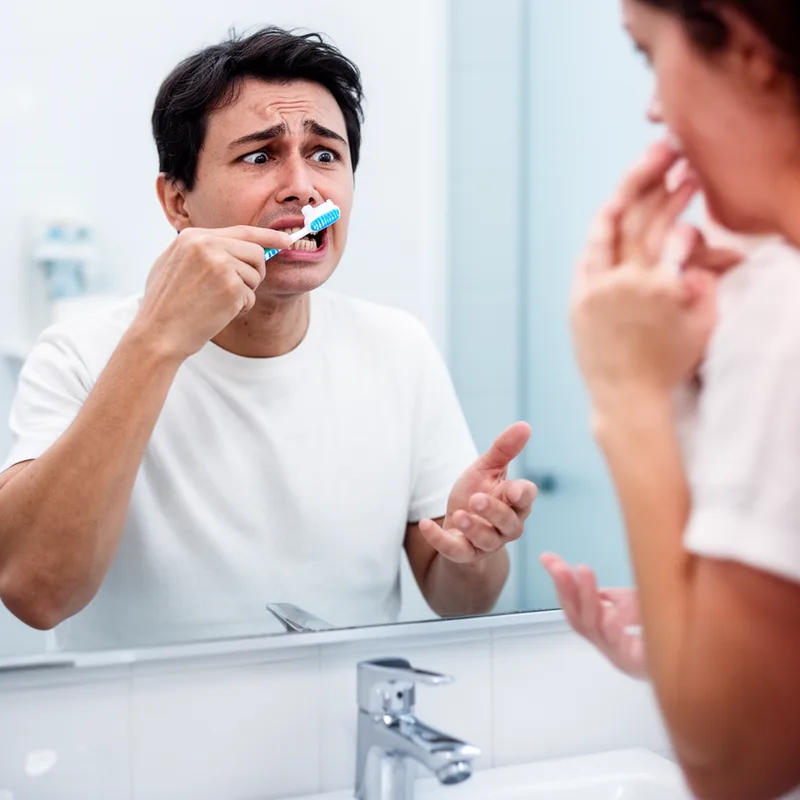
Patients with apraxia often struggle to carry out specific tasks, like brushing their teeth, even though they want to do so.
Synonyms

Difficulty planning and coordinating physical movements needed for actions like tying shoes or writing and for speech
Antonyms

How Impaired

Surface Forms
Morphology
apraxia = praxis (opaque) = a + prax + ia
The prefix 'a-' negates the root, but the overall meaning is not transparent to English speakers.
Etymology
The word apraxia comes from Greek parts a- meaning 'without' and praxis meaning 'action' or 'doing', so it literally means 'without action'. That's why apraxia describes a condition where someone wants to move and can move, but cannot plan or do the actions they want to do.