
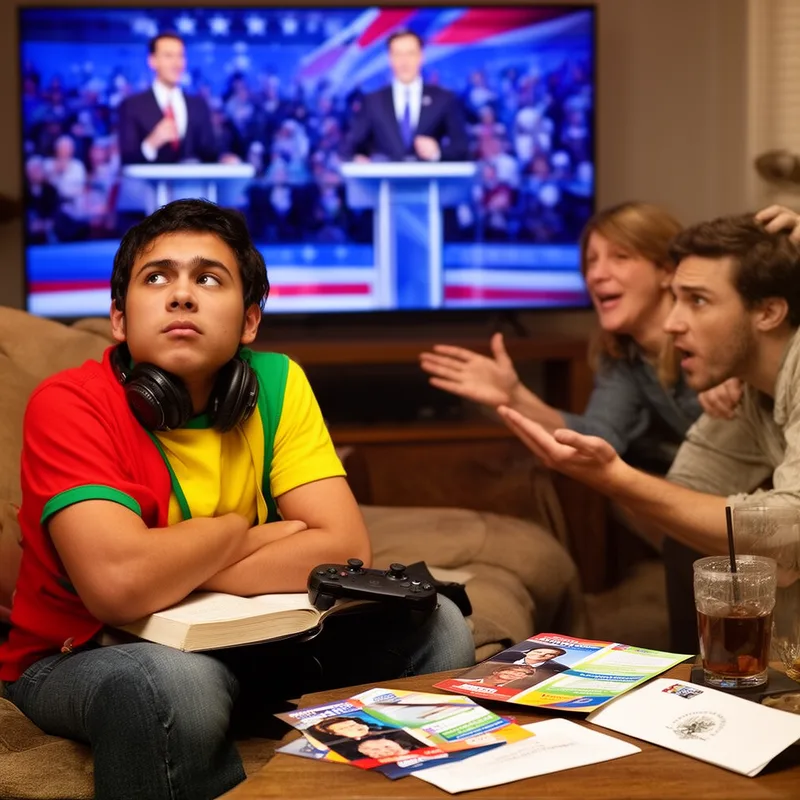
apoliticism
- noun
- /ˌeɪpəˈlɪtɪsɪzəm/
- Her apoliticism became evident during the discussions, as she expressed no interest in the election results.
Examples
-
Many young voters today demonstrate a sense of apoliticism, showing little concern for political issues or candidates.
-
William Tecumseh Sherman argued that "no Army officer should form or express an opinion" on party polities, and many other officers, George Marshall among them, conspicuously abstained from voting to underscore their commitment to apoliticism.
Academic text (2001) -
Boff refers to it as "supernaturalism"; it is present in the ideologies of "Christendom," apoliticism, and "faith without ideology."
Academic text (2005) -
The scale, randomness, and sheer injustice of detention without trial made their mark even on those who might tend toward apoliticism; detention made more obvious the crudeness of South African state power.
Academic text (1990) -
Those who defend these restrictions argue that "stability of command" (i.e., a minimum of political criteria in promotions and dismissals) helps to maintain the apoliticism of the Armed Forces (Cuadra, 1992).
Academic text (1992) -
The artist embraced apoliticism, focusing solely on his work without engaging in political debates.
Synonyms

 1
5.6
1
5.6

Not taking sides because of personal feelings when deciding


 1
7.9
1
7.9
Not supporting or favoring any political party

A lack of interest in things, even important ones

A calm lack of interest or strong feeling in everyday life
Antonyms


How Political

Surface Forms
Morphology
apoliticism = apolitic (semi-transparent) = a + politic + ism
The noun clearly means the state, quality, or doctrine of being apolitic.
Etymology
Apoliticism begins with a- meaning 'not' and the rest comes from politics, which means 'public life' or government, so apoliticism is the idea of not taking part in or not caring about politics.