
apolipoprotein
 1
8.8

- noun
- /ˌæpəˌlaɪpəˈproʊtiːn/
- Specialized
- Apolipoprotein A1 and B levels were estimated by the immunoturbidimetric method using kits from Diasys India Pvt Ltd.
- apolipoprotein A1
- apolipoprotein B
- apolipoprotein E
Examples
-
Some workers have assessed the role of these apolipoproteins in coronary artery disease, but the conclusions drawn are variable.
Academic text (2007) -
Late-onset Alzheimer's disease is more subtly influenced by the apolipoprotein E (E4 allele, 40% of all cases).
Academic text (2004) -
Thus, his primary research interest continues to deal with the regulation of human apolipoprotein A-I gene expression.
Blog text (1) -
On the other hand, mutation of the apolipoprotein E4 gene is the cause.
Blog text (20) -
Thus, the removal rate from plasma, in part, is related to the level of LDLR and apolipoproteins.
Blog text (22) -
Age and sex are two non-modifiable risk factors of CAD, which may affect serum apolipoprotein levels.
Academic text (2007) -
Apolipoprotein B is a constituent component of LDL and apoA1 of HDL.
Academic text (2007) -
There is a possible polygenic interaction among MYOC, OPTN, and apolipoprotein E (APOE).
Academic text (2018) -
ApoA1 is a constituent apolipoprotein of HDL, and any change in apoA1 levels may affect the cholesterol uptake property of HDL.
Academic text (2007) -
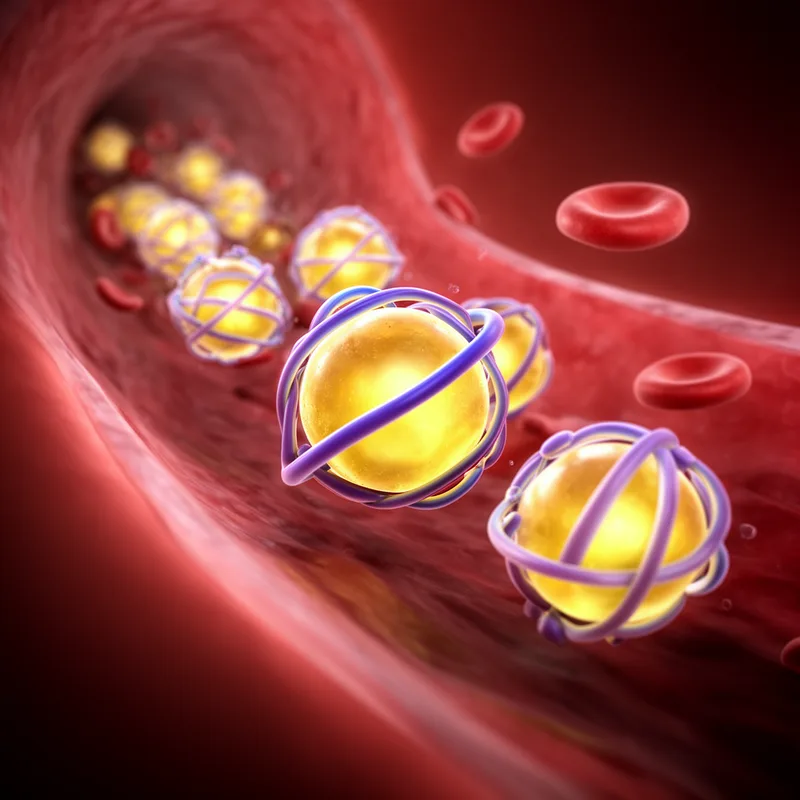
Apolipoprotein B plays a crucial role in transporting cholesterol through the bloodstream.
Surface Forms
Morphology
apolipoprotein = lipoprotein (semi-transparent) = apo + lipo + protein
Formed by prefixing the specialized combining form 'apo-' to the technical noun 'lipoprotein'; the morphological relation is clear but the elements are specialized and unfamiliar to average learners.
Etymology
Apolipoprotein comes from apo- 'away from', lipo- 'fat', and protein. So an apolipoprotein is the protein part that helps carry fats in the blood, which explains its role in moving fats around the body and why doctors check it for heart health.