

aplastic
 7
9.3
7
9.3

- adjective
- /ˌeɪplæˈstɪk/
- Specialized
- After months of treatment, he was finally stable despite his struggle with aplastic anemia.
- aplastic anemia
Examples
-
Doctors informed her that the aplastic condition prevented her body from creating new necessary blood cells.
-
The patient was diagnosed with aplastic anemia after tests revealed a failure in bone marrow to produce blood cells.
-
The reduction or absence of red blood cells causes aplastic anemia.
Blog text (28) -
However, PVB19 appears to be a fairly rare cause of aplastic anemia in healthy individuals.
Blog text (29) -
Aplastic Anemia
Academic text (2003) -
The first one was erythrocytic aplastic crisis due to infection with parvovirus B19 (PVB19, the virus mentioned above), of course!
Blog text (29) -
The external canal is hypoplastic, aplastic, or ends in a blind pouch with fistulous tracts leading toward a rudimentary TM.
Academic text (1996) -
PVB19 is a parvovirus that is fairly common and can cause upper respiratory infections, erythema infectiosum, arthritis and arthralgias, and transient aplastic crisis.
Blog text (29) -
A previously completely healthy girl developed PVB19 infection leading to both encephalitis and aplastic anemia (possible, but highly unlikely, and, even if PVB19 were found, it would be far more likely that it was able to cause anemia because of immunosuppression due to AIDS).
Blog text (29) -
Also, severe infections of the bone marrow with PVB19 causing aplastic anemia are rare aside from patients with pre-existing immunosuppression, such as transplant recipients, patients with malignancy, and, of course, patients with HIV.
Blog text (29)
Compounds
- Specialized
8
7.0
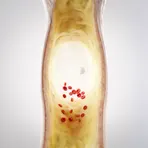
A condition in which bone marrow does not make enough red and white blood cells and platelets
Surface Forms
Morphology
Etymology
Aplastic comes from the Greek parts a- 'not' and plastic 'able to be shaped', the same root as the common word plastic. So in medicine aplastic means 'not able to form' new cells, which fits conditions where the body cannot make enough blood or tissue.