
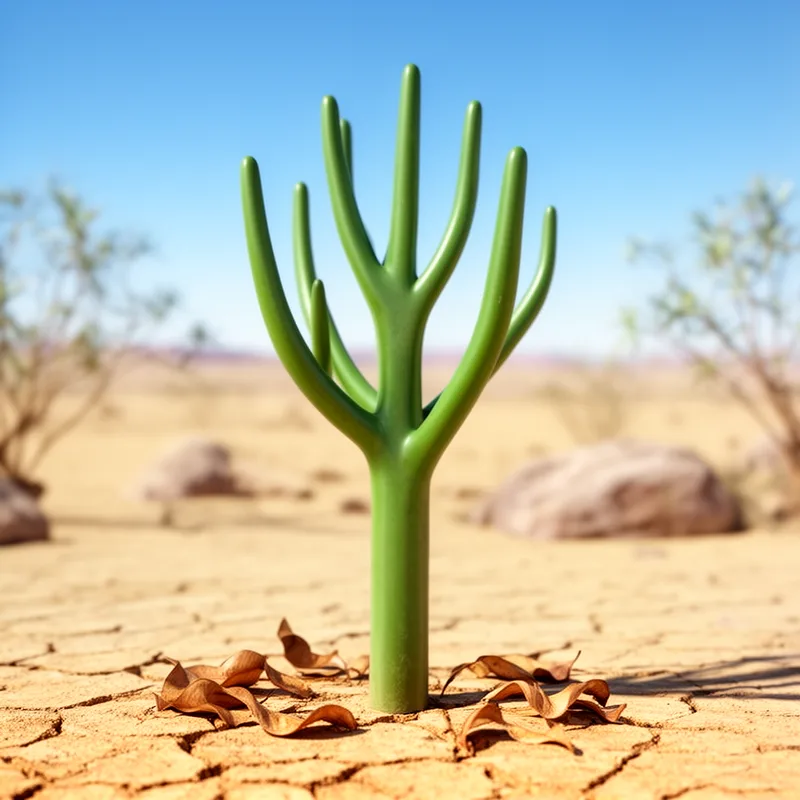
aphyllous
- adjective
- /əˈfɪləs/
- Specialized
- Some succulents are naturally aphyllous and rely on their stems for photosynthesis.
Examples
-
During the dry season, the plant becomes aphyllous to conserve water.
-
The botanist described several aphyllous species found in the arid region.
-
That plant is aphyllous.
-
The aphyllous plant thrived in its unique environment.
-
Some succulents are naturally aphyllous and rely on their stems for photosynthesis.
-
The botanist described several aphyllous species found in the arid region.
-
During the dry season, the plant becomes aphyllous to conserve water.
Synonyms
 3
2.9
3
2.9

A tree or plant that has no leaves
A tree that has lost most or all of its leaves
Antonyms

How Leafy

Surface Forms
Morphology
aphyllous = aphyll (opaque) = a + phyll + ous
Although the negating prefix 'a-' is present, the core element 'phyll' is a Greek combining form (not a standalone English word), so learners cannot reliably infer the meaning from familiar English vocabulary.
Etymology
The word aphyllous comes from Greek parts a- meaning 'without' and phyll meaning 'leaf', the same phyll you see in chlorophyll. So, an aphyllous plant is 'without leaves'.