
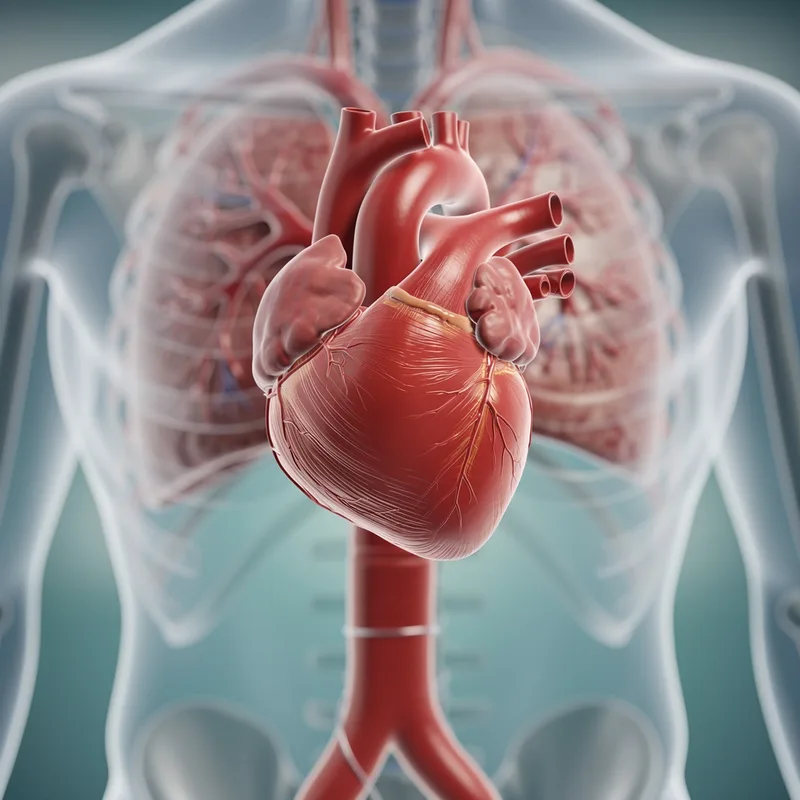
aortic aneurysm
 3
5.8
3
5.8

- noun
- /eɪˈɔrtɪk ˈæn.jə.rɪz.əm/
- Specialized
- Women with pulmonary hypertension, aortic aneurysm, severe aortic stenosis, and symptomatic ventricular dysfunction should be advised against pregnancy.
- a false aortic aneurysm
Examples
-
Two cases of non-intracranial bleeding were fatal: one ruptured aortic aneurysm in the aspirin group and one ruptured spleen in the placebo group.
Academic text (1991) -
The majority of aortic aneurysms occur in the abdominal region below the diaphragm.
-
Team doctors detected an aortic aneurysm and shut Green down for the entire season.
Blog text (28) -
A finding on chest plain film was suspicious for an ascending aortic aneurysm.
Academic text (2006) -
There are two known classifications of aortic aneurysms: Stanford's and De Bakey's.
Academic text (2016) -
Abdominal aortic aneurysms (AAAs) are a major cause of morbidity and mortality in the United States today.
Blog text (8) -
If not detected and surgically repaired, such aortic aneurysms can rupture, often fatally.
-
Men who have an aorta that is 30 millimeters wide or more are diagnosed with abdominal aortic aneurysm and monitored regularly.
Synonyms
 64
7.5
64
7.5
A bulge in a main blood vessel caused by a weak wall that can burst
 1
7.9
1
7.9
A bulge in the wall of a blood vessel caused by weakness

An artery that becomes wider than normal

A blood vessel from the heart that becomes wider than normal and has weaker walls
Surface Forms
Morphology
The term combines 'aortic' (relating to the aorta) with 'aneurysm' (a bulging or dilation of an artery), so the overall meaning — a bulge in the aorta’s wall — is directly derivable from its parts. Although medical in register, the compositional relation is clear and cross-linguistically comparable, so a learner who knows both constituents would understand it.
Etymology
Aortic aneurysm comes from a simple image: the main artery, the aorta, develops a weak spot that balloons out — the aneurysm. So the term means a dangerous 'bulge' in the artery wall that can burst and needs medical care.