
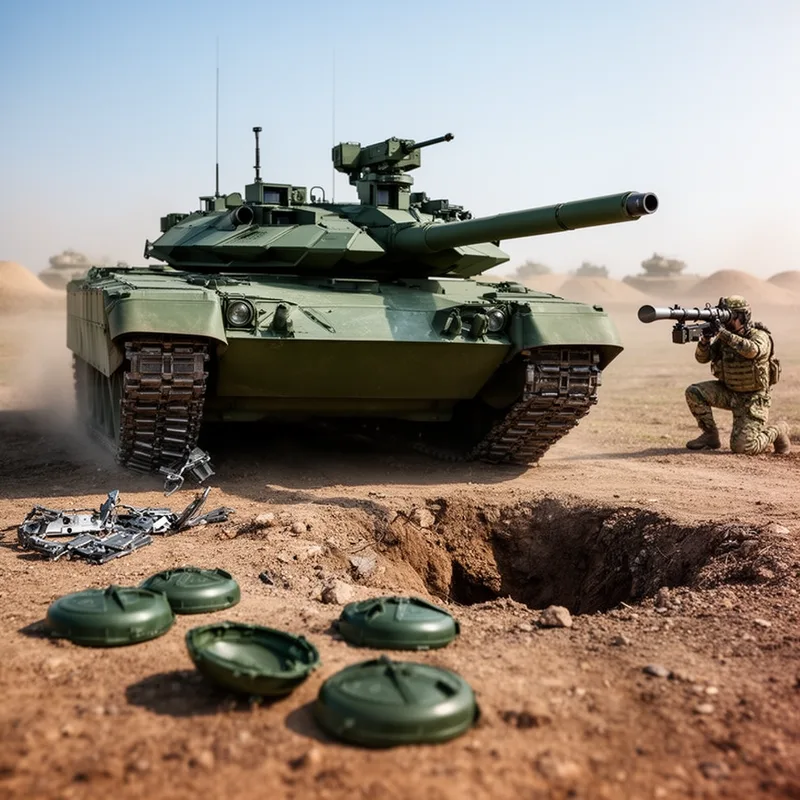
antitank
 3
5.4

- adjective
- /ˈæntiˌtæŋk/
- Specialized
- During the conflict, both sides relied on antitank systems to protect their armored divisions from enemy assaults.
- antitank weapons
Examples
-
It'd take an antitank missile to put a dent in that damn thing.
-
They are essentially antitank weapons but can be used for other purposes as well.
Academic text (1991) -
Other antitank weapons, of which NATO has tens of thousands, can destroy infantry combat vehicles.
Academic text (1991) -
The type of functional training is service-specific and relates to the specific core of the member; for example, infantry officers attend mortar and antitank training.
Academic text (2001) -
No open place in the eastern 50 km of former West Germany is beyond the range of antitank weapons from some place of concealment: woods, brush, culverts, embankments, buildings.
Academic text (1991) -
They rely heavily on surface-to-air missiles and antitank weapons to thwart the inevitable air and armor counterattacks.
Academic text (1999) -
The object of the Armenian attack was a Soviet Army depot, which they ransacked, removing small arms, assault rifles, mines, a tank, a personnel carrier, mortars, and antitank guns.
Fiction book (1992) -
The chart gives the Warsaw Pact double NATO's total of tanks and divisions and shows the pact holding a threefold or better advantage in artillery, antitank weapons, and surface-to-air missiles and launchers.
Academic text (1990) -
The soldiers were equipped with advanced antitank weapons designed to counter armored vehicles on the battlefield.
-
To defend the base effectively, the army installed new antitank measures along the perimeter.
Surface Forms
Morphology
Etymology
The word antitank starts with anti- meaning 'against' and ends with tank, the modern word for a heavy armored vehicle. So antitank describes weapons or measures made to stop or destroy tanks.