
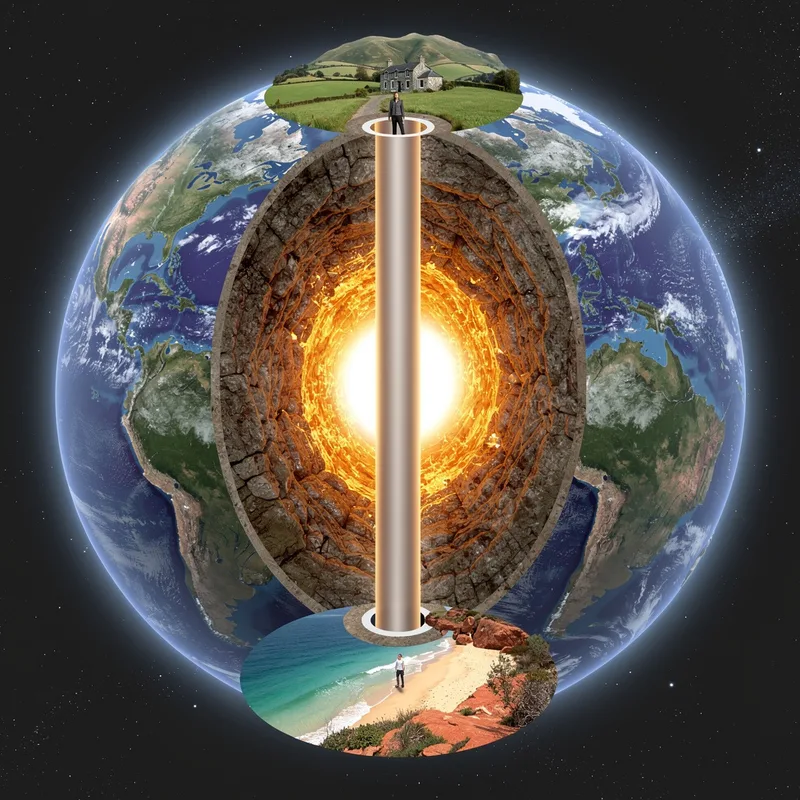
antipodes
 1
9.9
1
9.9

- noun
- /ænˈtɪpədiz/
 :
antípodas
:
antípodas
- When you travel to the antipodes, you are often visiting locations that are directly across the globe from your current site.
Examples
-
A survivor's hut, still standing today, was built on Antipodes Island in 1886.
Academic text (1995) -
New Zealand and the southern tip of South America are considered antipodes due to their positions on opposite sides of the Earth.
-
The British often called the mainland of New Zealand the Antipodes because it was the most remote part of the Empire.
Academic text (1995) -
The name Antipodes was chosen to reflect the island's position, which is almost exactly opposite, or antipodal to, Greenwich, England.
Academic text (1995) -
Of course, there are other reasons why American studies in the Antipodes have tended to take a Southern bias, reasons which complement what I have said already, and which are particularly true of the teaching of history.
Academic text (1993) -
Before humans landed on New Zealand's mainland, coastal areas that resembled these islands were filled with bird species now restricted to the Antipodes and a few other sub-Antarctic islands.
Academic text (1995) -
Stepping onto the narrow, rocky beach on the north shore of Antipodes Island, I was confronted by a phalanx of seabirds lining Anchorage Bay like a wild and welcoming crowd.
Academic text (1995) -
The concept of antipodes illustrates how distant areas can have contrasting climates, such as polar regions and equatorial zones.
Surface Forms
Morphology
antipodes = antipode (semi-transparent) = anti + pod + s
The form is transparently pluralized from antipode, so the meaning follows once that base word is known.
Etymology
Antipodes comes from the Greek parts anti- 'opposite' and pod- 'foot', meaning 'opposite feet'. Imagine someone on the other side of the Earth standing with their feet pointing the other way; that's why antipodes means places on opposite sides of the Earth.