
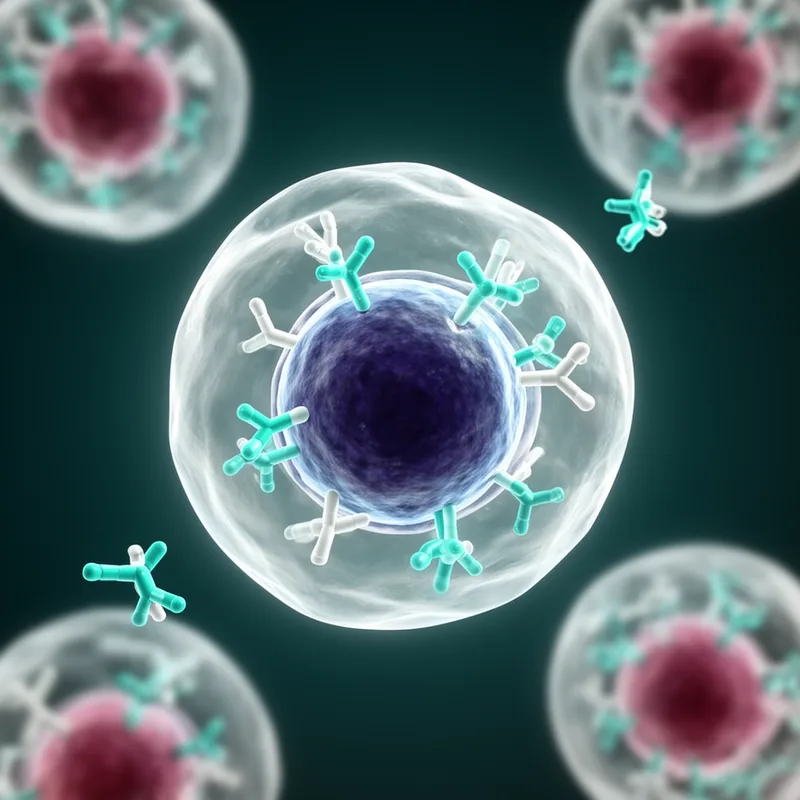
antinuclear
- adjective
- /ˌæntiˈnjuːklɪər/
- Specialized
 :
antinuclear
:
antinuclear
- Autoantibodies, such as antinuclear antibodies present in this case, are found in 80% of patients with polymyositis and dermatomyositis (DM) (11); however, they are usually non-specific.
- antinuclear antibody
Examples
-
The disease was later found to be associated with other autoimmune syndromes and acquired the name lupoid hepatitis because circulating antinuclear antibodies were identified in the patients.
Academic text (2012) -
She had both anti-Ro and antinuclear antibodies in her serum.
Academic text (1996) -
She is also positive on the antinuclear antibodies test.
Blog text (11) -
The serum titre of antinuclear factor was 1/320, but the patient was negative for all organ-specific antibodies.
Academic text (1996) -
The antinuclear test results indicated the presence of antibodies, leading to a diagnosis of lupus.
-
Doctors often check for antinuclear antibodies when assessing patients for autoimmune diseases.
-
Elevated levels of antinuclear antibodies can help confirm a diagnosis of systemic lupus erythematosus.
Surface Forms
Morphology
antinuclear = nuclear (semi-transparent) = anti + nucle + ar
The prefix anti- combines regularly with nuclear, but the cell-biological sense is technical enough that an average learner may not fully recover the exact meaning.
Etymology
Antinuclear is made of anti- 'against' and nucleus 'core' or 'little nut', so it literally means 'against the cell center'. That's why in medicine antinuclear describes antibodies that react with a cell's nucleus.

