
antigrowth
- noun
- /ˌæntiˈɡroʊθ/
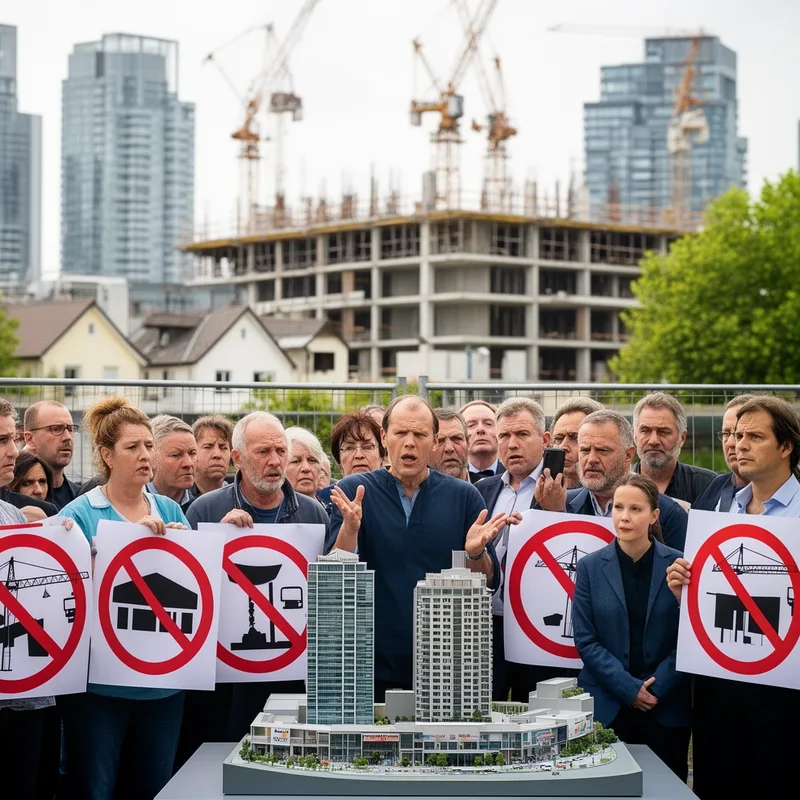
- Activists are advocating for an antigrowth movement to combat environmental degradation caused by new developments.
Examples
-
Thus, the green movement in general (not only advocates of carbon taxes) is seen in the U.S. as antigrowth.
Blog text (6) -
Friedman's book is thus an important antidote to the populist antigrowth movement and also to those who say that the free market is all we need.
Academic text (2005) -
The artists' antigrowth efforts may slow gentrification, which may keep the cost of living affordable, but neither result is guaranteed.
Academic text (2009) -
There is a well-developed populist antigrowth literature concerned with, among other things, the impact of growth on the environment and on poverty.
Academic text (2005) -
And to be antigrowth is to be beyond the fringe—utterly outside the mainstream and hence irrelevant.
Blog text (6) -
The city implemented antigrowth policies to preserve green spaces and limit urban sprawl.
-
Many communities support antigrowth initiatives to maintain the character of their neighborhoods amidst rapid change.
Antonyms


Surface Forms
Morphology
Etymology
Antigrowth comes from anti- 'against' and growth 'getting bigger', a bit like antibiotic where anti- also means 'against'. As a noun, an antigrowth movement is a group or political view that is against new development or more building.