
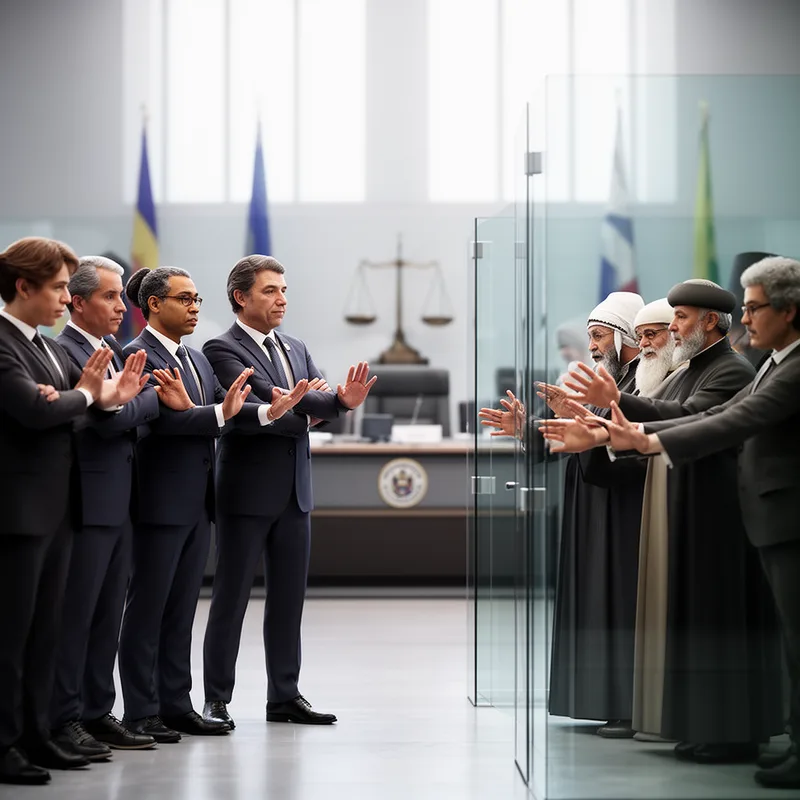
anticlerical
- adjective
- /ˌæn.tɪˈklɛr.ɪ.kəl/
- Protestant inroads in Ecuador began only with the ascension of the anticlerical Liberal Party in 1895 under General Eloy Alfaro.
- anticlerical legislation
Examples
-
Several decades of strongly anticlerical government in Mexico had not eradicated that country's popular Catholicism.
Academic text (1998) -
His battles with the church authorities and his extraordinary poetic talents made him the hero of a broad anticlerical laymen's movement.
Academic text (1995) -
La Regenta is a ferociously anticlerical novel.
Academic text (2003) -
Being relatively weak, the new government could not repel this challenge and repealed most of the anticlerical legislation.
Academic text (1999) -
Anticlerical politicians threatened the religious liberty of the masses, who had no electoral alternatives.
Academic text (1997) -
To win church support for his regime, Diaz chose not to enforce the anticlerical articles in the Constitution of 1857.
Academic text (1999) -
In 1926, President Plutarco Elias Calles began implementing the anticlerical provisions in the 1917 constitution.
Academic text (1999) -
The speaker's glee at the Bishop's discomfiture is perhaps not surprising in such a fiercely anticlerical part of Greece as rural Crete.
Academic text (1990) -
Heirs to the region’s strong anticlerical tradition, they profoundly distrust the religious ideologies of the lower classes.
Academic text (1992) -
The anticlerical reforms aimed to limit the church's power in government affairs.
Antonyms


How Anticlerical

Surface Forms
Morphology
Etymology
Anticlerical comes from anti- 'against' and clerical from cleric or clergy 'religious leader'. So, an anticlerical attitude or policy is one that opposes the power or influence of religious leaders.