
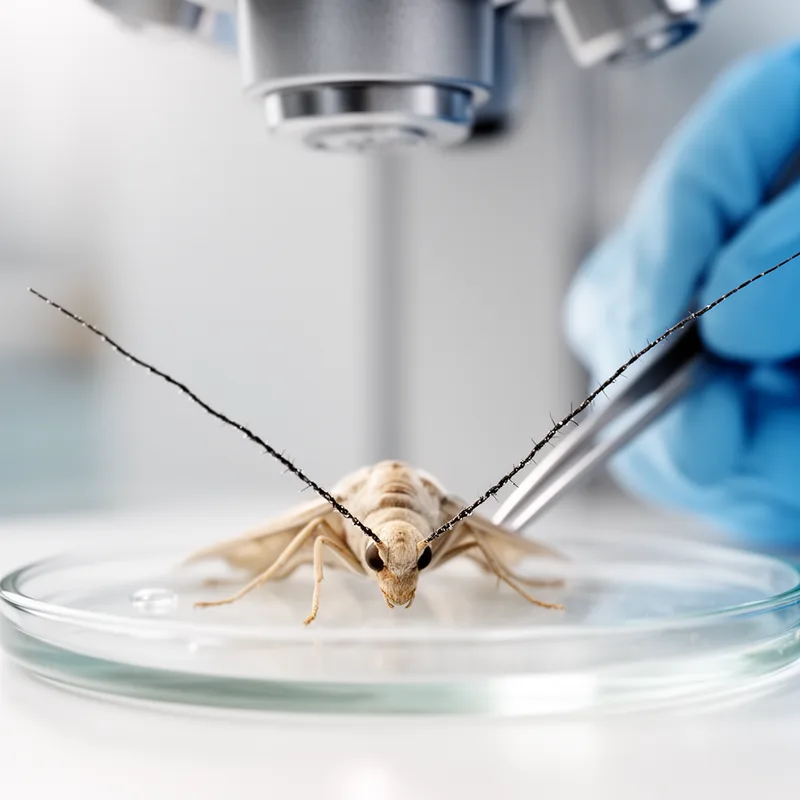
antennary
- adjective
- /ænˈtɛnəri/
- Specialized
- Changes in the antennary morphology can affect an insect's sense of smell.
Examples
-
The antennary structures of the moth are quite complex.
-
The scientist examined the antennary segments under the microscope for structural differences.
-
Certain sugars have a unique antennary pattern, influencing their biological functions.
-
Insects rely heavily on their antennary senses to navigate their environment.
-
The scientist examined the antennary structures of various insects to understand how these features help them sense their surroundings.
-
Changes in the antennary morphology can significantly impact how insects detect pheromones in their environment.
-
Insects utilize their antennary appendages to gather information about their surroundings, enhancing their ability to find food.
Synonyms


 1
8.8
Relating to the feelers on insects such as moths and bees
Surface Forms
Morphology
Etymology
Antennary comes from antenna, a word that first meant a ship's long pole or 'yard'. People later used antenna for the thin 'feelers' on insects and for radio rods, so antennary means 'related to antennae'.