

anomalistic
- adjective
- /əˌnɑːməˈlɪstɪk/
- Specialized
- Astronomers use the term anomalistic to describe the orbit of a planet when it is closest to the sun.
- anomalistic cycle
Examples
-
Large amplitudes were not found close to the lunar periodicities of 27.32 days (sidereal), 27.55 days (anomalistic), or 29.53 days (synodic).
Academic text (1995) -
No relations between the anomalistic or synodic lunar cycles were found for the first two years, although more calls were received during the first quarter of the third year.
Academic text (1995) -
Very weak lunar relationships with the anomalistic cycle, half-synodic, and sidereal were also found.
Academic text (1995) -
Fitting our models to the 3rd year's data separately, we again found small but statistically significant effects of lunar variables, but only the full anomalistic cycle showed effects consistent with data from the first 2 years.
Academic text (1995) -
The estimated anomalistic cycle lagged somewhat behind the moon cycle: the peak number of calls occurred a few days after the moon was at its maximum distance from the Earth (apogee).
Academic text (1995) -
Examination of the individual sums of squares suggested that this effect was due mainly to the full-anomalistic cycle, with smaller contributions from the half-synodic and full sidereal components.
Academic text (1995) -
No relationship was found between domestic violence calls and either the anomalistic (apogee to apogee) or synodic (full moon to full moon) lunar cycles over the first two years, but more calls occurred at the third quarter during the third year.
Academic text (1995) -
The anomalistic point in the moon's orbit occurs when it is at its maximum distance from the Earth.
-
Understanding the anomalistic cycle is crucial for predicting the moon's phases and their effects on tides.
Compounds

- Specialized
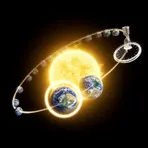
The time the Moon takes to return to its closest point to Earth, about 27.5 days
- Specialized
Time the Earth takes to go from one closest point to the Sun to the next closest point
Surface Forms
Morphology
anomalistic = anomaly (semi-transparent) = anomal + istic
Morphologically regular ('anomaly' + '-istic') but the specific astronomical sense referring to the orbital point/measure is technical and may not be deducible by average learners.
Etymology
Anomalistic comes from anomaly and the prefix an- 'not', giving the idea of 'not regular'. In astronomy this sense was used for the special point or time when a body comes closest to its star or planet, so an anomalistic year or month is the time between those closest approaches.

