
anodization
7.9
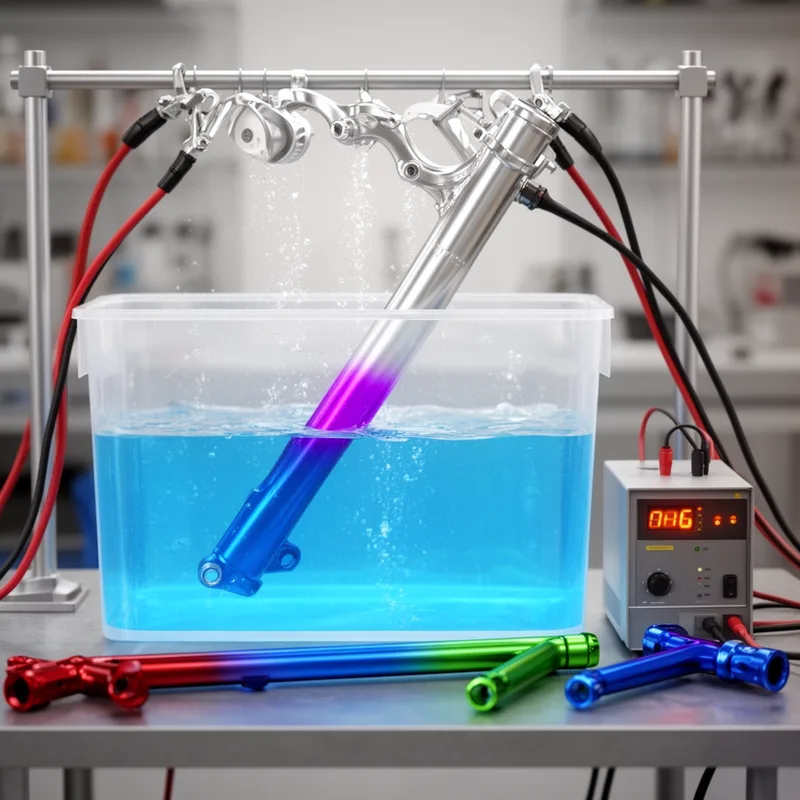
A process that uses electricity to make a thin protective colored layer on metal, often aluminum
- noun
- /ˌænədaɪˈzeɪʃən/
- Specialized
:
anodización
- During anodization, aluminum is immersed in an electrolytic solution to create a corrosion-resistant surface.
Examples
-
The furniture was treated with anodization to ensure it would withstand harsh weather conditions.
-
Now The thing is that paint is not as durable as anodization, but hey, now it matches.
-
The technique of anodization enhances the appearance and durability of aluminum by forming a protective oxide layer.
How Protective
electroplating

 1
5.2
1
5.2
- Specialized

 1
5.2
1
5.2

anodization
- Specialized
coating
35
3.4
35
3.4
paint
469
1.0
469
1.0
unplated
6.7
Surface Forms
anodization singular
anodizations plural
Morphology
Etymology
The word anodization begins with anode, from a Greek word meaning 'up' or 'upward way', because the change happens at the anode when electricity is used. So anodization is the process of using electricity to form a protective 'oxide' layer on metal, which helps protect it and can add colour.