
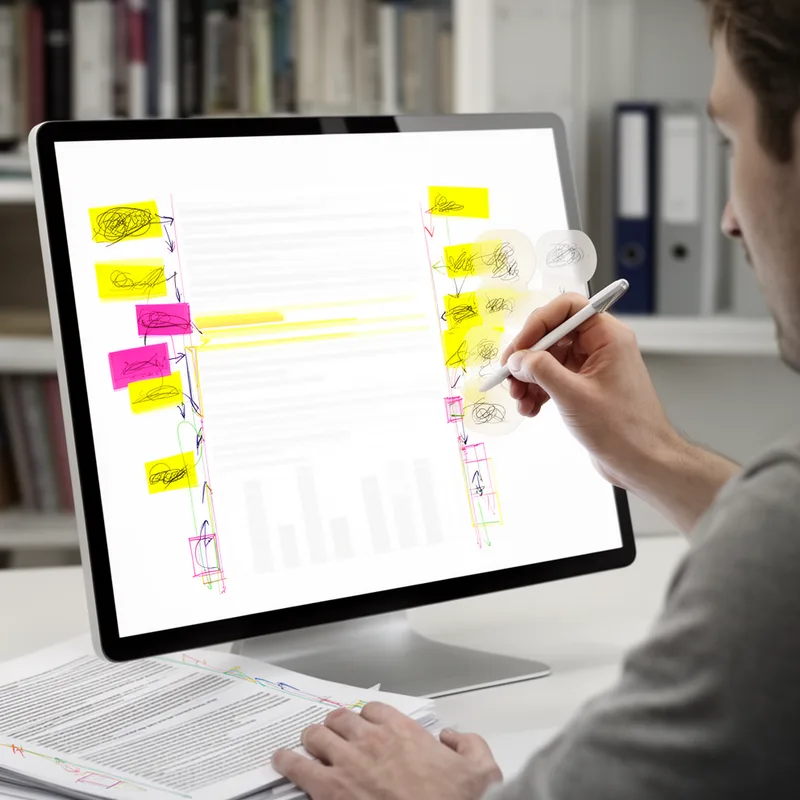
annotator
- noun
- /ˈænəˌteɪtər/
- The reliability of a corpus is ensured by the calculation of the inter-annotator agreement that measures the degree of agreement in performing the annotation task among the involved annotators.
Loading YouTube…
Watch on YouTubeIf you are an annotator, this is for you.
- If you are an annotator, this is for you.
Examples
-
"I think I am an annotator."
Academic text (2009) -
In other words, the algorithm was nearly as good at determining what kind of learning was happening as human annotators were in the large-scale study of 1,720 class hours involving 49 instructors.
Academic text (2017) -
If you are an annotator, this is for you.
-
Using the PDF annotator, we provided both written and audio feedback to our students.
Academic text (2013) -
The diagnosis question set reported in this evaluation was identified by independent annotators.
Academic text (2017) -
Most annotators, including Logeman, assume that the scene is Haegstad.
Academic text (1995) -
On the second paper, we used a PDF annotator, such as Adobe Reader XI, that allows a reviewer to insert analytic feedback into the body of the paper and also to provide holistic comments with the software's built-in microphone.
Academic text (2013) -
The annotator provided helpful comments on the manuscript to improve its clarity.
-
As an annotator, she carefully labeled each part of the image for the research project.
-
The teacher acted as an annotator, adding notes to guide students in their writing.
Synonyms

 11
3.0
11
3.0

A person who speaks about an event to explain and discuss it
 1
7.0
1
7.0
A person or program that labels each word with its part of speech

A person who adds notes or translations to explain a text

A person who takes notes during meetings or lectures
How Scholarly

Surface Forms
Morphology
Etymology
Annotator comes from Latin parts ad- 'to' and notare 'to mark', and is related to the everyday word note. So an annotator is a person or tool that 'marks' a text with notes or comments to explain or organise it.