
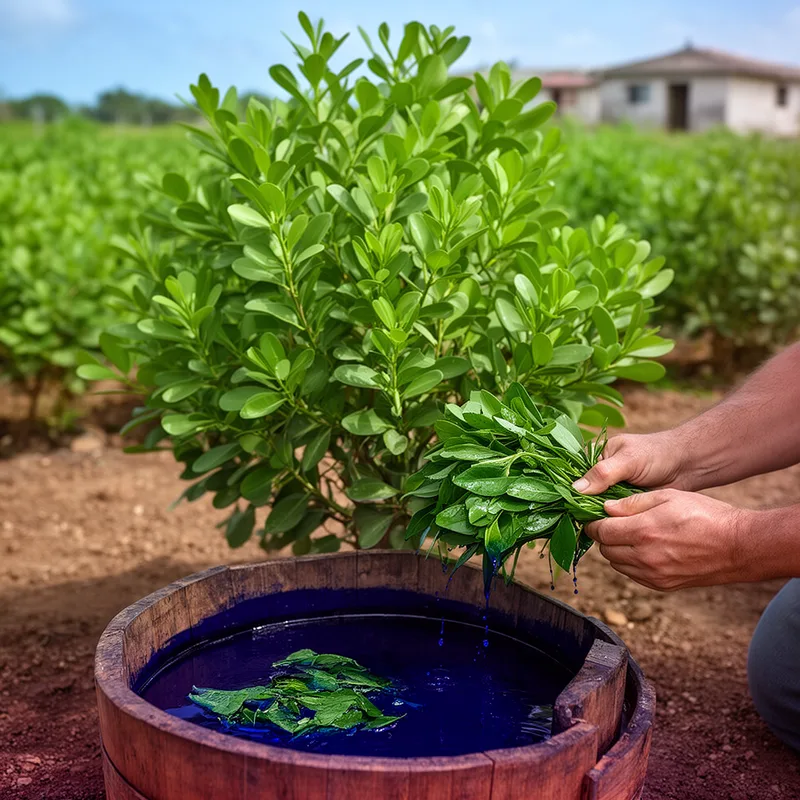
anil
- noun
- /ˈænɪl/
- Early colonists in the Caribbean relied on anil as a valuable export crop.
Examples
-
The farmers planted anil to harvest indigo dye for the textile industry.
-
Traditional methods for extracting dye from anil involve fermenting its leaves.
-
The anil plant is essential for producing indigo dye.
-
Many artists prefer to use anil for its vibrant color.
-
Farmers in the Caribbean cultivate anil for its valuable indigo dye.
-
In traditional dyeing processes, anil is used to create rich blue fabrics.
-
The anil plant is an important source of natural dye in many cultures.
Synonyms
A shrub from the West Indies and South America that people grow for indigo dye
A shrub from the West Indies and South America grown for its leaves to make indigo dye
A tropical herb or shrub used to make indigo dye
Compounds
- Specialized
A shrub from the West Indies and South America that people grow for indigo dye
Surface Forms
Etymology
Anil originally named the plant used to make a deep blue color, and the word traces back through Arabic al-nīl to the Sanskrit nīla meaning 'dark blue'. That's why anil can mean the shrub that is grown to produce indigo dye.

