
angiosperm
 1
8.5
1
8.5

- noun
- /ˈændʒioʊˌspɜrm/
- Specialized
- Many dispersers of angiosperm fruits are large vertebrates whose populations are often vulnerable to human disturbances.
- aquatic angiosperms
- angiosperm species
- angiosperm phylogeny
Examples
-
The adaptation of angiosperm sexual reproductive systems to aquatic conditions must represent a difficult evolutionary transition.
Academic text (1996) -
When the first angiosperm evolved from the gymnosperms, it most likely incorporated B and C genes into its flowers.
Academic text (2006) -
And at the base of the angiosperms down here, there are some wonderful and weird plants.
-
Data are based on a total list of 4,079 angiosperm species used in human food.
Academic text (2008) -
All three are angiosperms and more specifically monocots.
-
A similar trend was confirmed in more than 100 angiosperm genera (Corriveau and Coleman 1988).
Academic text (1996) -
Just as in angiosperms, inbreeding may be a specialized trait confined to colonizing species.
Academic text (2002) -
Vegetative reproduction correlates highly with both polyploidy and hybridization in angiosperms.
Academic text (1996) -
In most terrestrial and aquatic angiosperms, transfer of pollen to stigma is disrupted by contact with water.
Academic text (1996) -
The flower of an angiosperm has a male part, the stamen, which produces pollen.
Synonyms
 4
2.0
4
2.0
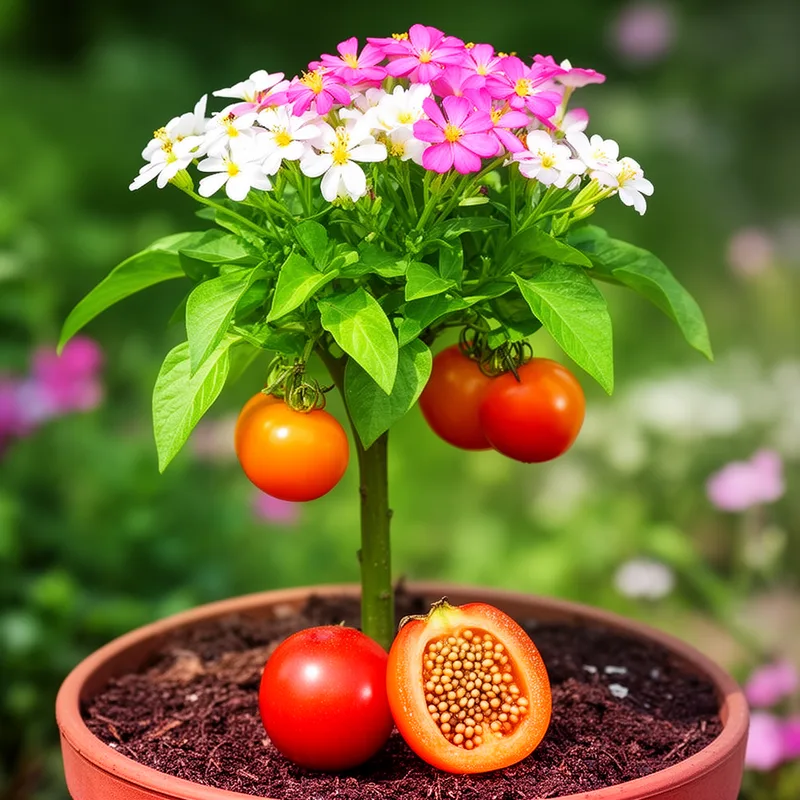
A plant that makes flowers and has seeds inside a fruit
Surface Forms
Morphology
Etymology
Angiosperm comes from Greek parts angio- meaning 'vessel' or 'container' and -sperm meaning 'seed'. So an angiosperm is a plant whose seeds are kept inside that vessel, the ovary or the fruit, which is why we call them flowering plants.