
aneurismal
- adjective
- /ˌæn.jʊˈrɪz.məl/
- UK
- An aneurismal rupture can lead to life-threatening internal bleeding.
Examples
-
The surgeon noted an aneurismal dilation in the patient's abdominal aorta.
-
After reviewing the scan, doctors confirmed the presence of aneurismal changes in the cerebral artery.
-
The aneurismal condition was serious.
-
Is this aneurismal swelling dangerous?
-
After reviewing the scan, doctors confirmed the presence of aneurismal changes in the cerebral artery.
-
An aneurismal rupture can lead to life-threatening internal bleeding.
-
The surgeon noted an aneurismal dilation in the patient's abdominal aorta.
Synonyms



 1
9.9
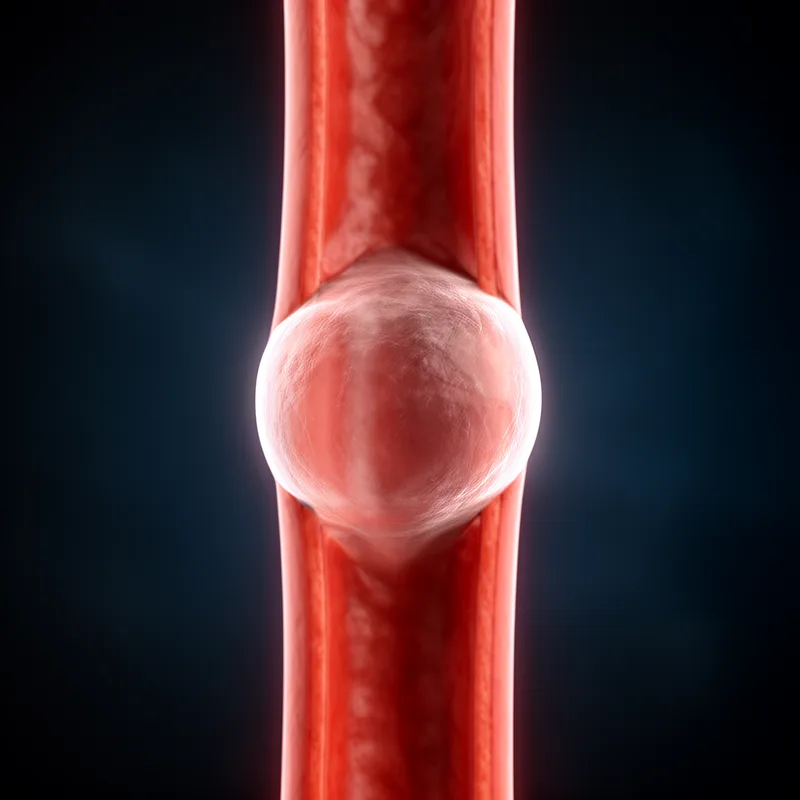
Relating to a weak, bulging part of a blood vessel that can burst

Having a weak, bulging part of a blood vessel that may burst

Relating to a weak bulge in a blood vessel that can burst
Surface Forms
Morphology
Etymology
The word aneurismal comes from aneurysm, from a Greek word meaning 'widening', like a balloon or a pipe getting wider. So aneurismal describes a problem where a blood vessel becomes abnormally 'wide', which is why an aneurismal rupture can be very dangerous.