
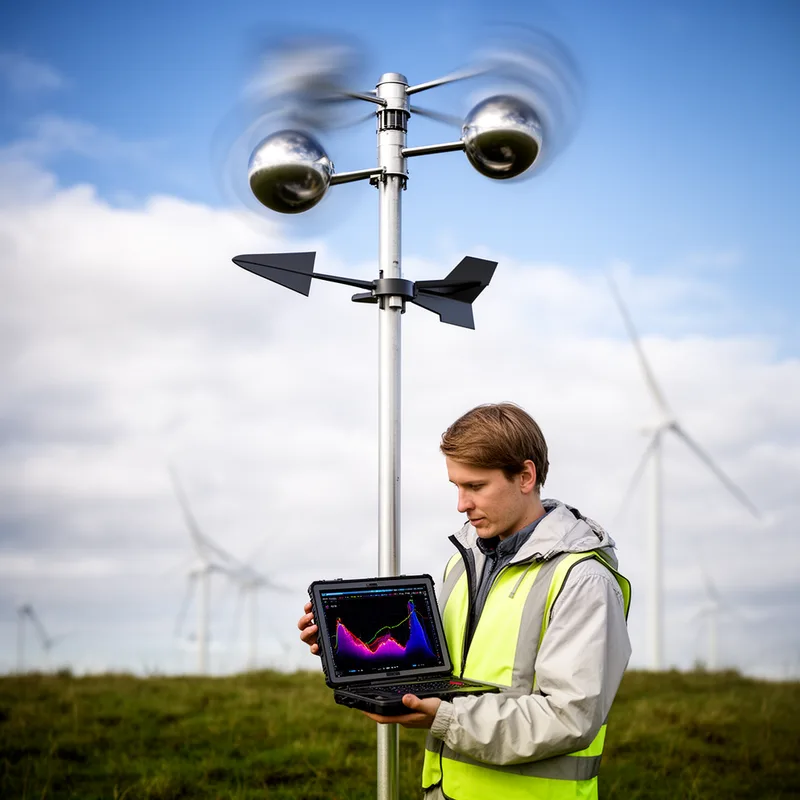
anemometry
- noun
- /ˌænəˈmɒmətri/
- Specialized
- Anemometry is essential for predicting weather patterns by measuring wind speed and direction.
Examples
-
Various methods exist to determine the roughness parameters (Mohammad et al. 2014), including morphometry, drag balance, and anemometry (turbulence measurements) methods. Morphometric Methods
Academic text (2018) -
Translational velocities of the limb segments were measured using hot film anemometry.
Academic text (1995) -
The engineers used anemometry to assess the impact of wind on the new building design.
-
During the experiment, the scientist relied on anemometry to gather precise data on air movement.
Synonyms
The recording and measuring of wind speed and direction using instruments
Surface Forms
Morphology
anemometry = anemo + metry
The parts literally mean 'wind' (anemo-) + 'measurement' (-metry), so the meaning is predictable for learners familiar with scientific combining forms but not for an average B1 learner who may not recognise 'anemo-'.
Etymology
Anemometry comes from the Greek root anemos meaning 'wind' and the ending -metry meaning 'measurement', like in speedometer. So, anemometry is the scientific measurement of wind speed and direction.

