
ancestor worship


 1
7.0
1
7.0
- noun
- /ˈænˌsɛstər ˈwɜrʃɪp/
- The practice of ancestor worship is central to the cultural identity of various communities, reflecting their respect for family lineage.
- form of ancestor worship
Examples
-
The Vietnamese have a deep tradition of ancestor worship.
Fiction book (1999) -
The rock canvases of Australia's Aboriginal artists celebrate the beliefs of a people steeped in ancestor worship.
Academic text (2002) -
I was now looking to find out what this ancestor worship was all about.
Fiction book (2002) -
This is nothing less than modern-day ancestor worship.
Academic text (2009) -
One example is ancestor worship, which involves thinking of one's forebears as present.
Academic text (2016) -
They also practice ancestor worship and house the spirits of dead ancestors in a wooden post in their homes.
Academic text (2006) -
George: There's more of a focus in New Orleans Voodoo on ancestor worship and less on the spiritual pantheon, even though there is access to that.
Blog text (33) -
These artisans were granted the privilege of using terracotta memorial heads for their own ancestor worship; the Oba permitted chiefs to use wooden heads.
Academic text (1993) -
As McAnany rightly put it, ancestor worship is not ultimately "about the dead but about how the living make use of the dead" (McAnany 2000: 484) and, by extension, make use of the past.
Academic text (2008) -
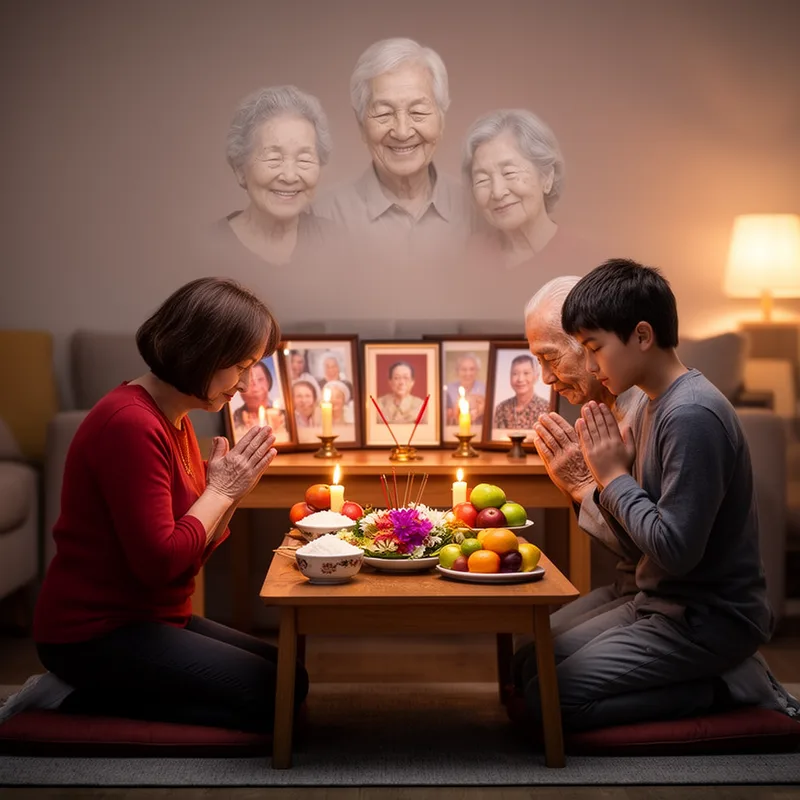
In many cultures, ancestor worship involves offering food and prayers to honor deceased relatives during special ceremonies.
Synonyms

A religious practice of honoring dead people as ancestors
Surface Forms
Morphology
The compound meaning is directly derivable from its parts: 'ancestor' (deceased forebear) + 'worship' (acts of devotion or ritual honor), so a learner who knows both words can infer it refers to honoring deceased ancestors. This compositional pattern is common cross-linguistically and follows plain noun–noun formation, making the sense transparent to B1 learners.
Etymology
Ancestor worship comes from the image of families leaving food, candles and photos on a small home altar for dead relatives; ancestor means a dead family member and worship means the respect shown to them. So the phrase means 'honoring and showing respect to dead ancestors'.