
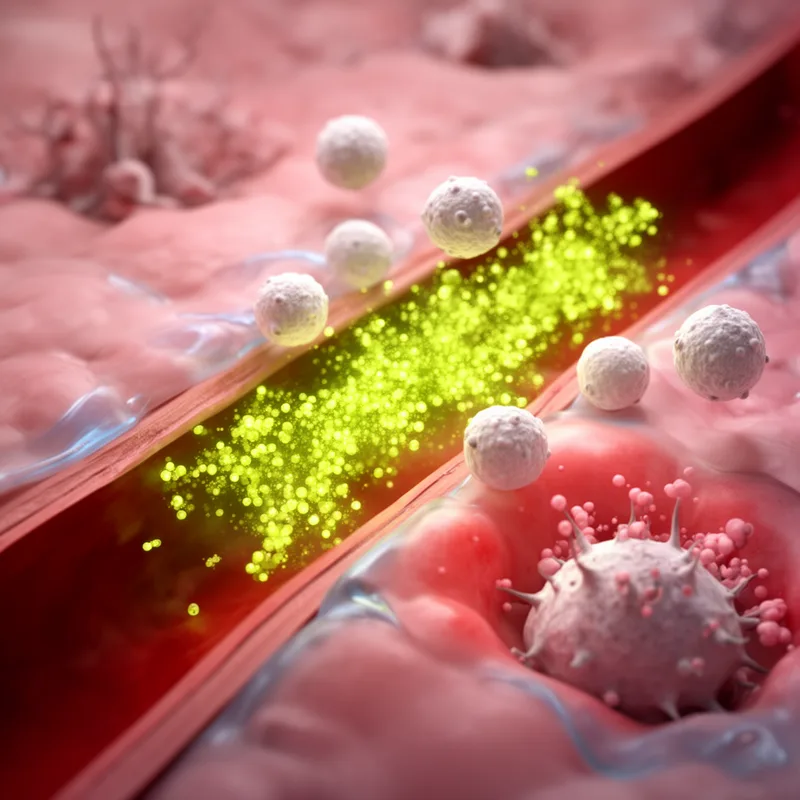
anaphylatoxin
- noun
- /ˌænəˌfaɪləˈtɑksɪn/
- Specialized
- During an allergic reaction, the body releases anaphylatoxins that help recruit immune cells to the site of inflammation.
Examples
-
The presence of anaphylatoxins in the bloodstream indicates that the immune system is responding to an allergen.
-
Elevated serum levels of the complement anaphylatoxins such as C5a can also contribute to endothelial dysfunction.
Academic text (2018) -
Researchers studied how anaphylatoxins influence the severity of inflammation in allergic asthma patients.
Synonyms

 7
5.0

A chemical made in the body that causes allergy symptoms like itching and sneezing
Surface Forms
Morphology
anaphylatoxin = anaphylaxis + toxin (opaque) = anaphyl + toxin
Although formed from 'anaphylaxis' + 'toxin', the term is a technical medical compound whose specific immunological sense is not predictable for average learners.
Etymology
Anaphylatoxin comes from the word anaphylaxis ('a severe allergic reaction') plus the part -toxin ('poison'). So, anaphylatoxin is a substance made during allergic reactions that acts like a tiny 'poison', causing quick inflammation and attracting white blood cells.